

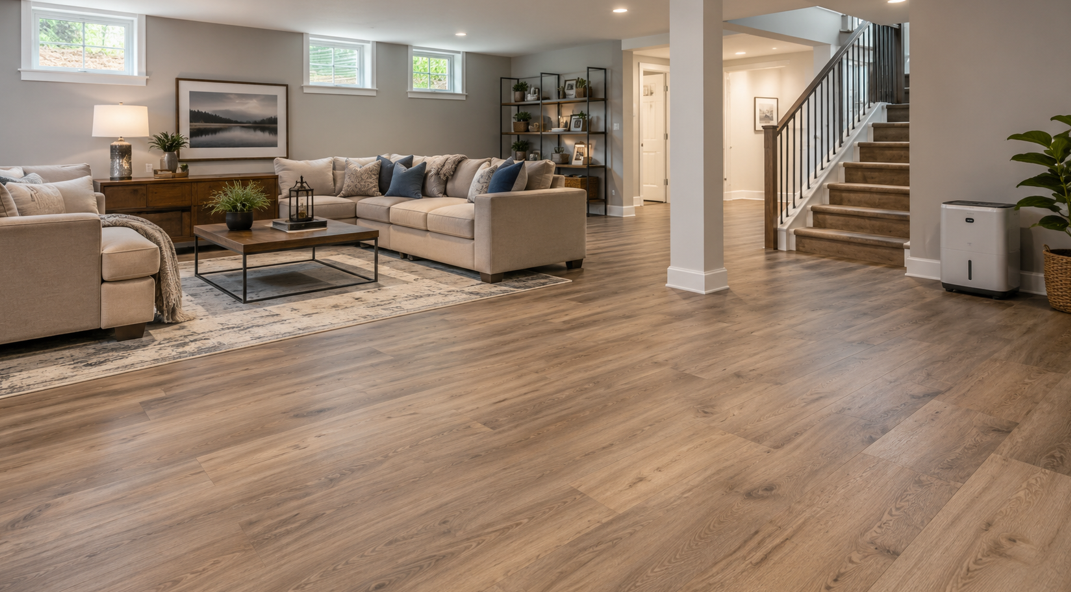
Basements can add valuable living space to a home, but they also present flooring challenges that upstairs rooms rarely face. Moisture, humidity, temperature changes, and the possibility of water reaching the floor all need to be considered before choosing a surface based on appearance alone.
That is especially important in Middle Tennessee, where humid summers and seasonal moisture can make below-grade spaces more demanding environments for flooring.
For homeowners in Spring Hill, a basement may serve as a family room, home office, playroom, guest suite, gym, entertainment area, or simply flexible space that needs to perform reliably through everyday life. Whatever the purpose, the flooring should support the design of the room without creating unnecessary concern when moisture conditions change.
At Floorz, more than 30 years of flooring and design experience in Middle Tennessee have reinforced an important principle: a basement floor should be selected for the environment first, then refined around the homeowner’s style, lifestyle, and design goals.
Waterproof flooring can offer the combination many basement projects need — practical moisture protection paired with enough colour, texture, and pattern choices to create a finished space that feels like a true part of the home.
Why Basement Flooring Requires a Different Approach
A basement is not simply another room located one level lower.
Because it sits at or below ground level, the space can experience moisture differently from rooms above grade. Humidity, condensation, dampness from surrounding soil, plumbing issues, and unexpected water intrusion can all influence flooring performance.
That does not mean every basement will experience water problems.
It does mean homeowners should choose materials with the environment in mind rather than assuming a flooring product that works beautifully upstairs will perform the same way below grade.
Moisture can also be subtle.
A basement does not need to have visible standing water for conditions to affect flooring. Humidity levels can fluctuate through the seasons, while cool concrete surfaces may interact differently with warm, humid air.
Good basement planning therefore begins below the decorative surface.
Before colour or plank style becomes the priority, consider the condition of the concrete slab or subfloor, the history of the space, drainage around the property, existing moisture concerns, and how the basement will be used.
Once those practical questions are addressed, design becomes much easier.
Why Waterproof Flooring Makes Sense in Middle Tennessee
Middle Tennessee experiences four distinct seasons, including hot, humid summers and periods of significant rainfall.
In a basement, those conditions make moisture awareness particularly important.
Waterproof flooring is designed to offer greater protection against water exposure than materials that readily absorb moisture. Depending on the product and installation, that can make it a strong choice for basement family rooms, recreation areas, home gyms, offices, and other finished spaces.
The practical advantage is straightforward: homeowners can create a comfortable, attractive basement while selecting flooring intended for environments where moisture is part of the conversation.
But practicality does not have to mean compromising on design.
Modern waterproof flooring is available in a broad range of wood-inspired looks, stone visuals, colours, plank sizes, and surface textures. A basement can feel warm and residential rather than purely functional.
That design flexibility matters in homes where the basement connects visually or stylistically with the rest of the interior.
Waterproof Does Not Mean Moisture Problems Can Be Ignored
One of the most important distinctions in basement flooring is the difference between choosing a waterproof surface and solving an underlying moisture problem.
Waterproof flooring can help protect the finished floor from water exposure, but it should not be treated as a substitute for addressing leaks, drainage issues, excessive moisture, or other building conditions.
If a basement has a history of water intrusion, it is worth identifying the source before installing a new floor.
Possible concerns may include:
Water entering around foundations
Plumbing leaks
Poor exterior drainage
Moisture moving through concrete
Condensation
High indoor humidity
Water around doors or windows
Previous flooding
Flooring is one part of the overall basement system.
The strongest result comes when the room itself is properly prepared and the flooring is selected for the actual conditions.
Luxury Vinyl Plank for Basement Spaces
Luxury vinyl plank, often referred to as LVP, is one of the most familiar waterproof flooring options for homeowners who want the appearance of wood with practical performance.
The visual appeal is easy to understand.
A basement can benefit from the warmth of a wood-look floor, especially when natural daylight is limited. Wood-inspired planks can make the room feel connected to living spaces upstairs while avoiding some of the moisture considerations associated with natural wood products in below-grade applications.
LVP is available in styles ranging from light natural oak looks to warm mid-tone browns and deeper, more dramatic colours.
For a basement family room, a warm wood appearance can help make the space feel welcoming.
For a home gym or recreation area, a more neutral or character-rich finish may help disguise everyday traffic.
For a modern basement office, a quieter plank with minimal variation can create a clean, organised foundation.
The right aesthetic depends on the room’s purpose and the design language of the rest of the home.
Waterproof Laminate: Another Wood-Look Option
Waterproof laminate products can also offer homeowners a wood-inspired appearance for certain applications.
Like other flooring categories, performance varies by product, so it is important to understand the manufacturer’s specifications and the demands of the particular basement.
The appeal is often the realistic wood visual combined with a surface designed for everyday residential use.
When comparing waterproof laminate with luxury vinyl, consider more than colour.
Look at construction, installation requirements, water-resistance or waterproof performance, underfoot feel, wear expectations, subfloor conditions, and the manufacturer’s recommendations for below-grade spaces.
This is where professional guidance becomes useful.
Two products may look very similar in a sample, yet their construction and suitability for a specific basement can be quite different.
Stone-Look Waterproof Flooring
Wood looks are popular, but they are not the only design direction for basement flooring.
Stone-inspired waterproof products can create a completely different atmosphere.
A stone visual can work beautifully in a basement bar, media room, home gym, mudroom-style entrance, or entertainment space. It can introduce the appearance of natural material while supporting a more practical flooring plan.
Soft limestone-inspired colours can create an elegant neutral foundation.
Slate-inspired visuals can feel stronger and more architectural.
Warmer stone looks can complement traditional and transitional homes, while cooler, restrained designs may suit contemporary interiors.
The key is to avoid thinking of a basement as a secondary space that deserves less design attention.
When flooring is thoughtfully coordinated with paint, lighting, cabinetry, furniture, and textiles, the room can feel every bit as intentional as the main level.
Choose Flooring Based on How the Basement Will Be Used
The best basement flooring is not determined only by moisture performance.
Lifestyle matters too.
A family with children may need a different solution from someone creating a quiet home office. A basement used for entertaining may have different priorities from a space designed around exercise equipment or overnight guests.
Family Rooms and Play Spaces
For family areas, durability and easy maintenance are often priorities.
Waterproof flooring can support active spaces where drinks, snacks, pets, toys, and frequent foot traffic are part of daily life.
A warmer wood-look plank can also make a large basement feel more inviting.
Home Offices
A basement office benefits from flooring that feels polished enough for a working environment while remaining practical.
Neutral wood visuals can create warmth without becoming distracting, especially when paired with good lighting and soft furnishings.
Home Gyms
Gym spaces require careful flooring selection because equipment, repeated movement, cleaning, and underfoot comfort may all affect the decision.
The specific waterproof product should be evaluated for the intended use rather than assuming every option is suitable beneath heavy equipment.
Guest Suites
If the basement includes a bedroom or guest area, the floor should help the space feel comfortable and residential.
Layering a waterproof floor with an area rug can add softness while maintaining a practical base beneath it.
Entertainment Areas
Basement bars, game rooms, media rooms, and entertaining spaces can benefit particularly from waterproof flooring because spills are a realistic part of how the room may be used.
In these spaces, darker wood looks or stone-inspired styles can create a more dramatic atmosphere.
Start With the Subfloor
Beautiful flooring depends on what is beneath it.
Many basements have concrete slabs, and the condition of the slab should be considered before installation begins.
Flatness, cleanliness, existing damage, moisture conditions, and other site-specific factors can influence how the floor needs to be prepared.
A new waterproof floor should not simply be placed over a surface without understanding its condition.
Professional evaluation and preparation can help identify issues that might otherwise affect the appearance or performance of the finished installation.
This is particularly important in below-grade environments because moisture can behave differently than it does on upper floors.
The finished planks or tiles may be the visible part of the project, but preparation is one of the most important steps in creating a floor that feels polished and performs as intended.
Explore Waterproof Flooring Without Sacrificing Style
Basement flooring used to be treated primarily as a practical decision.
Today, homeowners have far more design freedom.
Modern Waterproof Flooring can recreate a wide variety of visual styles, making it easier to coordinate the basement with the rest of the home.
If the main level features warm hardwood, consider a waterproof wood-look floor with related undertones rather than trying to match it exactly.
If the home leans towards modern farmhouse design, natural oak visuals, warm neutrals, and subtle grain can continue that aesthetic downstairs.
Traditional homes may benefit from richer wood-inspired colours or classic stone looks.
Contemporary spaces can use wider planks, restrained grain, and cleaner colour palettes.
The goal is continuity.
Your basement does not need to duplicate the upper level, but it should feel like it belongs to the same home.
Colour Can Change How a Basement Feels
Basements often receive less natural light than above-grade rooms, making flooring colour particularly influential.
Light floors can help create a brighter, more open feeling.
Warm mid-tones can make the room feel cosy without becoming too dark.
Deep colours can create a sophisticated atmosphere, particularly in media rooms or entertainment spaces, but they should be balanced with adequate lighting and lighter surrounding finishes.
Consider the size and layout of the basement as well.
In a large open room, mid-tone flooring can help create warmth and visual grounding.
In a smaller basement, a lighter surface may help the space feel more expansive.
Samples should be viewed in the actual room whenever possible. Lighting can change a flooring colour significantly, and basements often rely heavily on artificial light.
A floor that looks neutral in bright showroom lighting may appear warmer, cooler, darker, or more varied once installed downstairs.
Humidity Should Influence More Than the Flooring
In humid Middle Tennessee summers, the overall basement environment deserves attention.
Flooring selection is one part of managing that environment, but homeowners should also consider ventilation, heating and cooling, and indoor humidity.
A comfortable basement is created through several systems working together.
This is especially relevant when transforming unfinished space into a room that will be used regularly.
If the goal is to create a guest suite, office, family room, or play area, comfort matters just as much as durability.
The flooring may provide the visual foundation, but temperature, humidity, lighting, furnishings, and air quality all shape how the room feels.
Planning these elements together can produce a far more successful renovation.
Pet-Friendly Basement Flooring
Pets can add another layer to flooring decisions.
For many Spring Hill households, a finished basement may become a favourite space for dogs and other pets because it provides room for play, relaxation, or easy access to the outdoors.
Waterproof flooring can be appealing in these settings because accidental spills and everyday messes can be easier to manage when the flooring itself is selected with moisture resistance in mind.
Scratch resistance and wear performance should also be discussed when choosing a specific product.
Not every waterproof floor performs identically, so families with active pets should consider surface durability alongside waterproof construction.
Colour and pattern can also help.
Floors with natural variation or medium tones may make everyday dust, pet hair, and minor marks less visually prominent than very dark or very light surfaces.
Practicality can be part of good design.
Layer the Room for Greater Comfort
Waterproof flooring creates a practical foundation, but basements can benefit from additional softness.
Area rugs are one of the easiest ways to add warmth, pattern, and acoustic comfort.
A rug can define a seating area in a large family room, soften a guest suite, create a comfortable play area, or add colour to a basement office.
Furniture and textiles can also counterbalance the harder surface of the floor.
Upholstered sofas, curtains, cushions, throws, and soft lighting help create a room that feels finished rather than simply converted.
This is particularly important in open basements, where one continuous flooring surface may serve several different zones.
Instead of changing flooring from one area to another, use rugs, furniture groupings, lighting, and cabinetry to define each function while keeping the floor visually continuous.
Do Not Overlook Stairs and Transitions
If the basement is accessed by an interior staircase, the relationship between the upper floor, stairs, and basement deserves careful attention.
The materials do not have to match perfectly.
They should, however, feel deliberate together.
A hardwood main level may transition into a closely related waterproof wood look in the basement. Similar undertones can create continuity even when the materials differ.
Transitions between basement rooms also matter.
If a bathroom, utility room, or other space uses a different flooring material, consider how colours and surface heights meet at doorways.
Small details can have a significant impact on whether a renovation feels professionally designed.
Professional Installation Matters in Below-Grade Spaces
A basement flooring project involves more than selecting attractive planks.
The existing slab or subfloor needs to be assessed, the product needs to suit the application, and installation requirements should be followed correctly.
Transitions, room layout, plank direction, expansion requirements where applicable, and finishing details all affect the result.
Professional installation also allows the flooring plan to respond to the actual conditions of the home rather than assumptions.
For homeowners renovating a basement, that expertise can help prevent a design-first decision from overlooking practical considerations.
The best floor is one that looks right, works for the lifestyle, and is suited to the space where it will live.
Create a Basement You Actually Want to Use
A basement should not feel like a compromise.
With thoughtful planning, it can become one of the most useful and enjoyable spaces in a home.
Waterproof flooring supports that transformation by addressing one of the biggest concerns in below-grade rooms: moisture. At the same time, today’s range of wood and stone-inspired designs means homeowners do not have to choose between practical performance and a cohesive interior.
For Middle Tennessee homes, the decision should consider humidity, the condition of the basement, the intended use of the room, pets, traffic, maintenance expectations, and the overall design of the property.
That combination of practical and aesthetic thinking is especially important in a long-term flooring investment.
With more than 30 years of flooring experience and an in-house design-focused approach, Floorz helps homeowners evaluate both sides of the decision. For Spring Hill families planning to finish or update a basement, professional guidance can help narrow the options to flooring that fits the space, lifestyle, and design vision.
If you are exploring waterproof flooring for your basement, schedule a free in-home estimate to compare options and find a solution designed for your home and the realities of Middle Tennessee living.


