

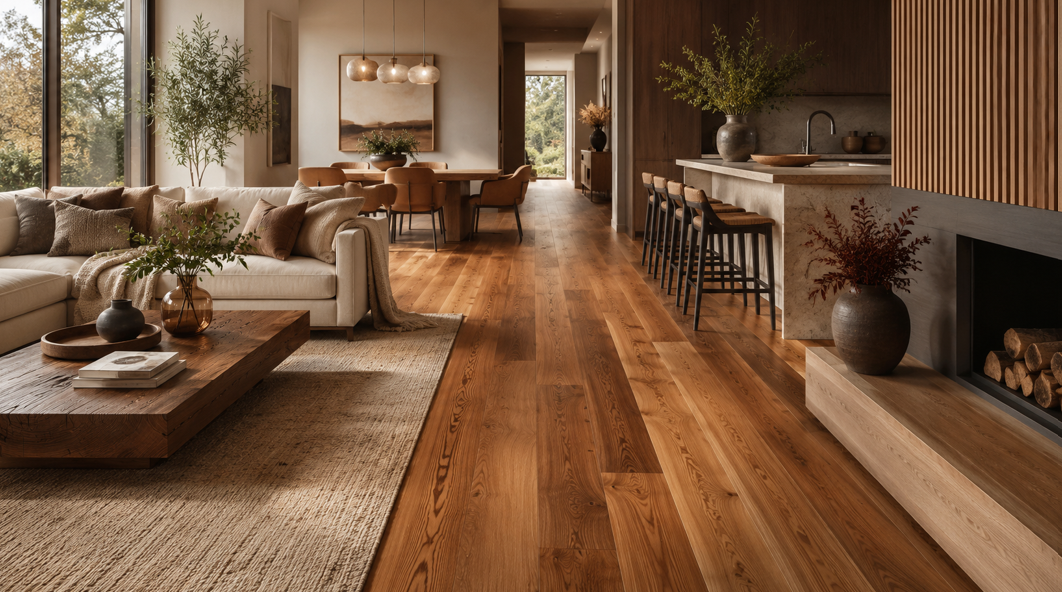
Hardwood flooring has always had the ability to shape the mood of a room before a single piece of furniture is added. In 2026, that mood is becoming noticeably warmer. Cool greys and washed-out finishes are giving way to wood tones with more depth, softness, and natural character — creating interiors that feel welcoming, grounded, and designed to be lived in.
For homeowners in Franklin, that shift feels especially at home. The area’s mix of elegant traditional houses, modern farmhouse influences, and newer open-concept homes creates a natural setting for hardwood that feels refined without becoming formal. Warm wood tones can support that balance beautifully, bringing character to classic architecture while giving contemporary interiors a softer foundation.
At Floorz, the goal is not simply to follow a colour trend. With more than 30 years of flooring and design experience in Middle Tennessee, the team helps homeowners choose floors that work with the architecture of the home, the surrounding finishes, everyday lifestyle needs, and the region’s climate.
If you are planning a flooring update this year, here is how the warm wood movement is shaping hardwood design in 2026 — and how to make it work in your home.
Why Warm Wood Tones Are Leading 2026 Hardwood Design
The return to warmer hardwood is part of a wider move towards interiors that feel more natural, comfortable, and connected. Rather than designing rooms around cool, high-contrast finishes, many homeowners are choosing materials that introduce warmth through texture and organic colour.
Hardwood is particularly suited to this direction because the material already carries natural variation. Grain, knots, tone shifts, and subtle differences between planks give a floor visual depth that does not need to rely on a dramatic stain to make an impact.
In 2026, the most appealing warm floors are not necessarily very dark or strongly red. The trend is broader and more versatile than that. Think natural-looking woods with golden undertones, soft honey warmth, medium browns, chestnut-inspired depth, or neutral shades that lean gently warm rather than grey.
The result is a floor that can feel current without looking temporary.
That distinction matters. Flooring is a long-term design decision, and the best trend-led choices are usually the ones that still have a timeless foundation. A warm natural hardwood can feel fresh in 2026 while remaining adaptable as paint colours, furniture, rugs, and décor change around it.
What Does a “Warm” Hardwood Tone Actually Look Like?
Warmth in hardwood comes from undertone.
A floor does not need to be orange, red, or dark brown to feel warm. Even relatively light wood can have golden, beige, caramel, or soft brown undertones that make the room feel more inviting. By comparison, cooler flooring tends to lean towards grey, taupe, or ashy undertones.
That difference can change the way an entire room reads.
A warm light wood can make a space feel bright and relaxed. A warm mid-tone can add richness without overpowering other finishes. A deeper brown can create a more traditional or dramatic foundation while still feeling natural.
For homeowners who want longevity, warm mid-tones are especially useful because they sit comfortably between very pale and very dark flooring. They can work with a wide range of cabinet colours, upholstery, stone, tile, and area rugs, giving homeowners more freedom to update the rest of the room over time.
The important point is to look beyond the sample by itself. Wood colour changes depending on daylight, artificial lighting, wall colour, cabinetry, and nearby materials. A plank that appears softly golden in a showroom may read differently next to creamy white cabinetry, a cool stone fireplace, or dark furniture.
That is why flooring selection should always be treated as part of the complete room design.
Warm Hardwood and the Franklin Design Aesthetic
Homes across the area often bring together traditional Southern character and more contemporary design choices. Warm hardwood works particularly well in that environment because it can connect old and new without forcing the room too far in either direction.
In a traditional interior, warm wood can support detailed millwork, substantial furniture, classic rugs, and natural stone. It adds richness without requiring the floor itself to become overly decorative.
In a modern farmhouse setting, warmer hardwood can soften white walls, black accents, painted cabinetry, and clean-lined furnishings. The floor keeps the room from feeling stark and gives simple materials more visual depth.
In transitional spaces, the same flooring can act as a bridge between classic and contemporary elements. A warm oak-inspired tone, for example, can sit comfortably beneath a streamlined sofa, a traditional dining table, or a mix of modern and vintage pieces.
For a homeowner who wants a house to feel polished but still comfortable, this versatility is one of the strongest reasons to consider warmer hardwood in 2026.
The Warm Wood Palettes to Consider in 2026
There is no single “correct” warm hardwood colour. The strongest choice depends on the scale of the room, natural light, existing finishes, and the atmosphere you want to create.
Light Natural Warmth
Light wood remains appealing for homeowners who want brightness, but the 2026 version often feels softer and more natural than the pale, cool floors of previous years.
Look for light tones with beige, cream, or subtle golden undertones. These can be especially effective in open spaces where the goal is to create an airy feeling while maintaining warmth.
Light warm hardwood also provides a flexible background for furniture. It can pair with linen, leather, painted cabinetry, natural stone, black metal, and colourful textiles without making the space feel visually heavy.
Honey and Golden Mid-Tones
Mid-tone wood is one of the easiest ways to bring warmth into a home without committing to a very dark floor.
Honeyed, golden, and gently caramelised tones can highlight natural grain while creating a welcoming feel. They work well in living rooms, dining areas, kitchens, and other shared spaces because they give the room presence without dominating it.
These tones are also well suited to interiors that combine natural materials. Wood, stone, woven textiles, and warm metals can all sit together comfortably when the flooring provides a balanced, earthy base.
Rich Browns and Chestnut-Inspired Tones
For homeowners who prefer a more established or dramatic look, deeper warm browns can bring sophistication and character.
The key in 2026 is often to choose depth without creating an overly heavy effect. Rich brown hardwood can feel elegant when balanced with lighter walls, soft upholstery, layered lighting, and enough visual breathing room.
This approach can work particularly well in dining rooms, studies, formal living spaces, or larger open areas where the floor can carry more visual weight.
Let the Wood Grain Be Part of the Colour Story
Colour is only one part of how hardwood creates warmth. Grain and texture matter just as much.
A highly uniform floor can feel clean and tailored, while visible variation between boards creates a more organic and relaxed effect. Natural grain movement, subtle knots, and tonal variation can make the floor feel layered rather than flat.
This is particularly useful when homeowners want warmth without choosing a stronger stain. A relatively neutral wood tone can still feel rich when the natural character of the material is allowed to show.
Texture can also influence the overall aesthetic. A smoother finish tends to feel more refined and contemporary, while a more tactile or character-rich surface can support rustic, farmhouse, or heritage-inspired interiors.
When choosing Hardwood, it helps to compare not only colour samples but also the way different products handle grain, variation, plank character, and finish. These details can change the personality of a room as much as the basic shade.
Warm Hardwood Works Best as Part of a Whole-Home Palette
A beautiful floor should not have to compete with the rest of the room.
Before choosing a warm wood tone, look at the permanent and semi-permanent finishes that will surround it. Cabinetry, countertops, fireplace stone, tile, built-ins, doors, and large furniture pieces all affect whether a flooring colour feels cohesive.
One useful approach is to identify the undertones already present in the home.
If the room contains creamy whites, warm stone, bronze finishes, tan leather, or earthy textiles, a warm hardwood may naturally reinforce the palette.
If the room contains cooler marble, crisp blue-grey paint, chrome, or very cool cabinetry, the floor can still be warm, but the transition may require more careful balancing. A neutral-warm wood may connect the two sides better than a strongly golden or reddish tone.
Area rugs can also help bring a palette together. They create a visual transition between flooring and furniture while adding another layer of colour, softness, and personality.
The goal is not to make every finish match. A well-designed room usually benefits from variation. The goal is to make sure the undertones feel intentional together.
Consider Natural Light Before Choosing a Wood Tone
Hardwood colour can shift considerably through the day.
A room with abundant natural light may make warm flooring appear brighter and more golden, while a space with limited daylight can make deeper tones feel richer. Artificial lighting also influences the result, especially in the evening.
This makes samples especially important.
Rather than choosing a floor from a small swatch in isolation, compare options against the finishes already in the room and view them under the lighting conditions the space experiences throughout the day.
For open-concept homes, consider how the flooring looks from multiple viewpoints. A tone that works beautifully beside kitchen cabinetry should also feel right next to the living room furniture, hallway paint, and adjoining spaces.
The larger the flooring area, the more influential the colour becomes.
Tennessee Humidity Should Be Part of the Hardwood Conversation
Design is important, but hardwood selection in Middle Tennessee also needs to account for climate.
The region experiences humid summers and seasonal moisture changes, so choosing hardwood should involve more than selecting a species and stain. Product construction, moisture resistance, installation conditions, and the specific room all matter when planning a long-lasting floor.
Both solid and engineered hardwood can offer beautiful warm tones, but the right option depends on the home and application. Engineered construction may be worth considering in situations where dimensional stability and moisture conditions are important, while solid hardwood may be appropriate for other rooms and project goals.
This is where professional guidance becomes valuable. A colour may be perfect aesthetically, but the flooring also needs to suit the environment in which it will be installed.
Floorz’s design-led approach brings those two decisions together: how the floor should look and how it needs to perform.
Pairing Warm Hardwood With 2026 Interior Colours
Warm flooring becomes especially effective when it supports the wider colour story of the home.
Earthy greens can create a grounded, nature-inspired pairing with warm wood. Creamy neutrals offer a softer alternative to stark white and allow the floor grain to become more visible. Rich browns can create tonal depth, while muted blues can provide a cooler contrast without making the overall space feel cold.
Warm hardwood can also make white rooms feel less clinical. Instead of relying on strong décor colours to add character, the floor itself introduces natural variation and visual warmth.
For homeowners who enjoy changing décor seasonally, a balanced warm wood can be particularly practical. Summer linens, autumnal textiles, holiday colours, and spring accents can all work against the same natural foundation.
That adaptability is one reason warm hardwood is more than a passing colour moment. It supports a broad range of design directions.
Do Not Choose a Trend Without Thinking Long Term
A 2026 flooring trend can be useful inspiration, but flooring should not be selected simply because a particular colour is popular this year.
Hardwood is a major visual and practical investment. A better question is whether the current trend aligns with the qualities you already value: natural materials, inviting spaces, visible wood character, flexible design, and a sense of warmth.
If it does, warm hardwood can be a very durable design choice.
Instead of chasing an extreme version of the trend, consider a tone that feels authentic to your home. Natural warmth usually offers more longevity than a highly stylised stain that depends on one specific design moment.
This approach also makes future updates easier. Paint, furniture, lighting, and rugs can change while the floor continues to provide a versatile foundation.
How to Find the Right Warm Hardwood for Your Home
Start with the room rather than the sample rack.
Consider the architecture. Look at the cabinetry, stone, tile, and trim. Think about whether the home leans traditional, farmhouse, contemporary, transitional, or somewhere in between. Pay attention to pets, traffic, lifestyle, and the way each room is used.
Then think about feeling.
Do you want the floor to disappear quietly into the design, or become one of the room’s defining materials? Should the space feel light and relaxed, warm and layered, or rich and formal?
From there, compare hardwood options with professional design guidance. A flooring specialist can help narrow the range based on colour, construction, durability, installation, and the specific conditions of your home.
For local homeowners, that process can be particularly helpful because many homes combine multiple design influences. The strongest flooring choice is often the one that creates continuity between them.
Bring More Warmth Into Your Home in 2026
Warm wood tones are shaping hardwood design in 2026 because they offer something homeowners continue to value: beauty that feels comfortable.
From softly golden natural woods to balanced mid-tones and deeper browns, warmer hardwood creates a foundation that can complement traditional Southern character, modern farmhouse simplicity, and contemporary interiors alike. It can make an open room feel more welcoming, add richness to a neutral palette, and connect furniture and finishes through natural colour and texture.
Just as importantly, choosing hardwood in Middle Tennessee means thinking about performance alongside appearance. Climate, lifestyle, room conditions, and installation all deserve the same attention as colour.
With more than 30 years serving Nashville and Middle Tennessee, Floorz combines flooring expertise with in-house design guidance to help homeowners make those decisions with confidence. If you are considering new hardwood for your home, schedule a free in-home estimate and explore warm wood options that fit your space, style, and everyday life.


