

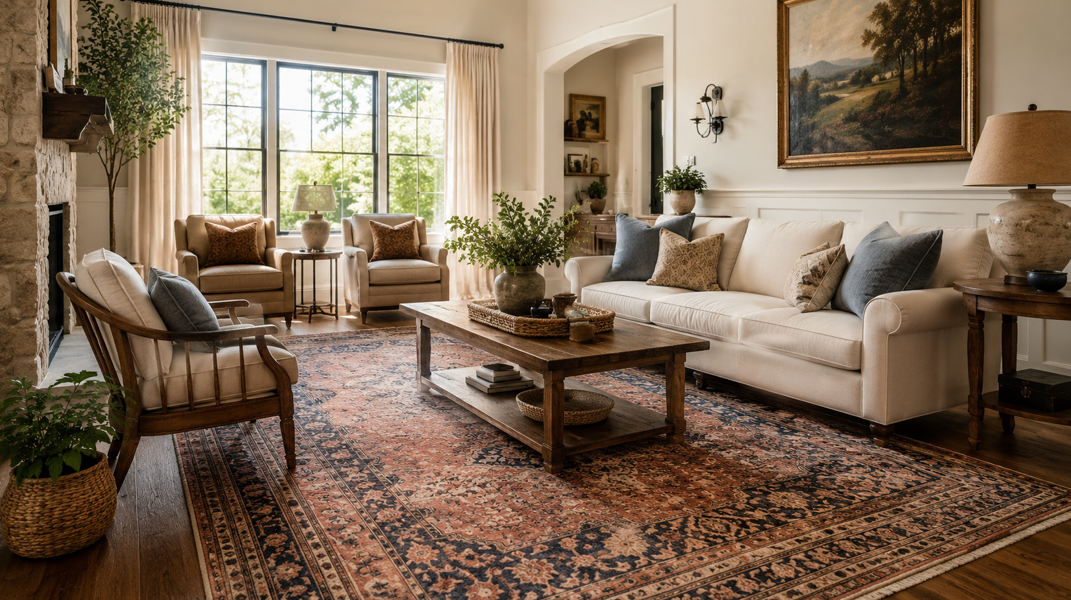
Some rooms feel complete the moment you walk into them. The furniture may be simple, the colour palette restrained, and the architecture familiar, yet one element gives the space warmth, personality, and a sense of history.
Often, that element is the rug.
Vintage-inspired and antique-style area rugs have a unique ability to make a home feel collected rather than decorated all at once. Their intricate patterns, softened colours, layered textures, and heritage influence can bring depth to both traditional and contemporary interiors.
For homeowners in Nolensville, where newer family homes often sit alongside Southern architectural influences and modern farmhouse styling, vintage rugs offer an appealing way to introduce character without overwhelming the room.
At Floorz, more than 30 years of flooring and design experience across Middle Tennessee have shown how influential an area rug can be. It can define a seating arrangement, soften a hardwood floor, introduce colour into a neutral room, or connect furnishings that might otherwise feel unrelated.
The most successful vintage rug does more than fill an empty section of flooring. It helps tell the story of the room.
Why Vintage-Inspired Rugs Feel So Timeless
Interior design trends change constantly, but vintage rugs continue to feel relevant because they are rooted in design traditions rather than one particular moment.
Their patterns often draw from classic motifs, ornamental borders, botanical forms, medallions, geometric details, and weaving traditions that have been used for generations.
That history gives them visual staying power.
A highly trend-driven rug may strongly identify with one particular style or colour movement. A vintage-inspired rug can be surprisingly adaptable because it often contains several colours and layers of pattern.
Those subtle variations allow the rug to work with changing furniture, wall colours, artwork, and accessories over time.
A rug with warm red, blue, cream, and brown tones might sit comfortably beneath a traditional dining table today, then later work in a more relaxed room with linen upholstery and contemporary lighting.
The rug is not limited to one design identity.
That versatility is one reason vintage rugs work so well in homes that evolve gradually.
Antique Character Without an Antique Interior
Choosing a vintage-style rug does not mean turning your home into a period interior.
In fact, some of the most interesting rooms pair heritage-inspired rugs with contemporary furnishings.
A patterned rug beneath a clean-lined sofa creates contrast.
A traditional medallion rug can soften a modern dining room.
A faded, time-worn look can add texture beneath simple furniture in a neutral living space.
This tension between old and new often gives a room more personality than choosing every element from the same design style.
For modern farmhouse interiors, vintage rugs can be especially effective.
White or cream walls, natural timber, painted cabinetry, black metal, and simple upholstered furniture create a calm base. An antique-inspired rug introduces colour and pattern without taking the room away from its relaxed character.
In a more traditional home, the rug can reinforce architectural details such as millwork, fireplaces, built-ins, and classic furniture while keeping the overall room warm and inviting.
What Makes a Rug Look Vintage?
Vintage character can come from several different design elements.
The pattern is usually the most obvious. Traditional motifs, centre medallions, repeating geometric shapes, decorative borders, and botanical patterns all contribute to a heritage feel.
Colour matters just as much.
Many vintage-inspired rugs use softened rather than highly saturated shades. Muted navy, dusty red, warm brown, faded green, cream, gold, terracotta, and soft charcoal can give a rug the appearance of having developed naturally over time.
Surface appearance also influences the effect.
A perfectly uniform rug may feel new and crisp, while subtle variation, distressed details, abrash-style colour changes, or a gently faded finish can create more visual depth.
The goal is not necessarily to make a new rug look old.
It is to capture the sense of character, craftsmanship, and layering associated with textiles that have been part of a home for years.
Start With the Room, Not the Rug
A beautiful rug can still feel wrong if it is chosen without considering the room around it.
Before selecting a vintage design, look at the permanent and larger elements in the space.
Consider:
Flooring colour
Wall paint
Upholstery
Cabinetry
Fireplace materials
Window treatments
Artwork
Timber finishes
Metal finishes
Natural light
If the room already contains significant pattern, a quieter vintage rug may provide balance.
If the furniture is largely neutral, the rug can carry more colour and detail.
The floor beneath the rug should also influence the decision.
Warm hardwood can pair beautifully with rugs containing muted reds, creams, blues, or greens. Darker flooring may benefit from rugs with lighter areas that create contrast. Pale wood can support deeper vintage patterns without making the room feel heavy.
A good rug selection considers both the rug itself and the surface it will frame.
Vintage Rugs and Hardwood Flooring
Hardwood and vintage-inspired rugs are natural design partners.
The organic grain of wood gives the room warmth, while the textile adds softness, colour, and pattern.
The combination can also make large hardwood areas feel more comfortable and visually structured.
In a living room, a rug can establish the main seating zone.
In a dining room, it can visually anchor the table and chairs.
In a bedroom, a large rug can soften the floor around the bed while adding warmth underfoot.
The key is choosing a rug large enough to feel intentional.
A rug that is too small can make furniture appear disconnected, particularly in a larger open-plan space. A correctly scaled rug helps the furniture feel like a cohesive arrangement rather than a collection of separate pieces.
Vintage rugs work particularly well when some of the hardwood remains visible around the edges. This creates contrast between the hard and soft surfaces while allowing both materials to contribute to the design.
Choosing the Right Colour Palette
One of the advantages of vintage-style rugs is their ability to carry several colours without feeling excessively busy.
Rather than matching the rug directly to one piece of furniture, look for colours that relate to the room more broadly.
A rug might repeat the warm brown of a timber table, the blue of an accent chair, the cream of the walls, and a small amount of rust found in artwork.
Those relationships make the space feel connected.
Warm Heritage Colours
Rust, terracotta, burgundy, faded red, gold, and warm brown can create a rich, traditional mood.
These colours work particularly well with medium or dark hardwood, leather furniture, warm metals, and cream walls.
Muted Blues and Greens
Soft navy, faded teal, sage, and olive can add colour while remaining calm.
These shades work beautifully in interiors influenced by nature and can pair well with timber, stone, linen, and neutral upholstery.
Soft Neutrals
Vintage does not have to mean colourful.
Cream, taupe, faded charcoal, beige, and soft brown patterns can provide heritage character in a quieter way.
This approach can suit homeowners who prefer understated interiors but still want the texture and complexity of a traditional rug design.
Rug Size Can Transform the Room
The pattern may catch your eye first, but rug size often has a greater effect on how finished the room feels.
A properly scaled rug creates structure.
In a living room, the rug should visually connect the furniture rather than sit as a small island in the centre.
Depending on the size of the space, the front legs of the main seating pieces may rest on the rug, or the entire furniture arrangement may sit within it.
In a dining room, the rug should extend beyond the table far enough that chairs remain comfortably positioned on the rug when pulled back.
In a bedroom, the rug can extend beneath the bed and provide softness around the sides and foot.
Hallways and entrances may benefit from runners or narrower formats that introduce pattern without overwhelming the architecture.
When browsing Area Rugs, consider scale at the same time as colour and pattern. A beautiful rug in the wrong proportions rarely achieves the same effect as a thoughtfully sized option.
Use a Vintage Rug to Define Open-Plan Spaces
Many newer homes use open layouts that combine kitchens, dining areas, and living spaces.
These layouts can feel spacious and flexible, but they sometimes need visual definition.
Area rugs are one of the easiest ways to create that structure without adding walls or architectural divisions.
A vintage rug beneath the main seating arrangement can clearly establish the living room portion of an open space.
A second rug in a nearby dining area may use related colours without repeating the exact same pattern.
The result feels connected but not overly matched.
This works particularly well in Nolensville homes where family areas need to serve multiple purposes.
The flooring can remain continuous throughout the space while rugs establish individual zones for conversation, dining, reading, or play.
Layering Vintage Rugs for More Character
Layering rugs can create a relaxed, collected look when handled thoughtfully.
One common approach is to place a smaller patterned vintage rug over a larger neutral rug.
The lower layer provides scale and texture, while the vintage piece becomes the focal point.
This can work well when a homeowner loves a particular rug but the piece is not large enough to define the entire seating arrangement.
Layering can also add visual interest to neutral rooms.
A natural woven rug beneath a patterned textile creates contrast between texture and ornament.
The key is restraint.
If both rugs compete strongly in colour, pattern, and texture, the combination can become distracting.
One should usually act as the foundation while the other provides the stronger design statement.
Vintage Rugs in Modern Farmhouse Interiors
Modern farmhouse design continues to suit many Middle Tennessee homes because it blends traditional warmth with a cleaner, more relaxed aesthetic.
Vintage rugs fit naturally within that mix.
Imagine a room with light walls, warm hardwood, linen upholstery, a timber coffee table, simple black lighting, and a faded patterned rug.
The rug brings history and visual richness to materials that might otherwise feel too simple.
It can also soften the contrast created by black-and-white farmhouse palettes.
Instead of relying only on neutral furniture and finishes, the rug introduces subtle colour while preserving the relaxed character of the space.
For homeowners who want modern farmhouse styling to feel personal rather than formulaic, vintage textiles can make a significant difference.
Create a Collected Look in Newer Homes
One challenge in decorating a newly built home is creating a sense of history.
Fresh walls, new floors, new cabinetry, and new furniture can look beautiful, but the room may initially feel too perfect or unfinished.
A vintage-inspired rug can help.
Its pattern and softened colour can make the space feel as though different elements have been gathered gradually rather than selected all at once.
Combine the rug with a mixture of materials and ages.
A contemporary sofa can sit beside a traditional timber table.
Modern lighting can complement antique-inspired artwork.
Simple built-ins can display books, pottery, framed photographs, and personal objects.
The rug helps connect those layers.
This is especially useful in family homes where the goal is elegance without formality.
Vintage Rugs in Dining Rooms
Dining rooms are ideal spaces for heritage-inspired rugs because the furniture arrangement is naturally defined.
A rug beneath the dining table creates a clear visual centre and introduces softness into a room dominated by hard surfaces.
Traditional patterns can work beautifully with timber tables, upholstered dining chairs, painted cabinetry, or modern lighting.
The rug does not need to match the furniture style exactly.
A more contemporary dining set can look particularly striking against a traditional pattern.
Practicality should still influence the decision.
Consider how the room is used, whether young children or pets are frequent visitors, the expected traffic, and how comfortable you are with ongoing rug care.
A dining room used every day may require a different material or pattern choice from a formal room used only occasionally.
Vintage Rugs for Bedrooms
A bedroom should feel calm, layered, and comfortable.
Vintage-inspired rugs can contribute all three.
Their softened colours can introduce pattern without making the room feel overly energetic, while the textile surface adds physical warmth.
In a neutral bedroom, the rug can become the main source of colour.
In a more decorated room, it can help connect bedding, curtains, furniture, and artwork.
A faded blue and cream rug might create a relaxed atmosphere, while deeper rust and burgundy tones can make a bedroom feel richer and more traditional.
The right choice depends on the overall mood you want to create.
Designing for Pets and Family Life
A beautiful rug should also fit everyday life.
Middle Tennessee communities are home to many active families and pet owners, so practical considerations should be part of the selection process.
Think about traffic, cleaning expectations, children, pets, and where the rug will be placed.
A formal sitting room may allow for a more delicate choice than a busy family room.
Pattern can also be helpful in active spaces.
Rugs with tonal variation and detailed designs may disguise small amounts of everyday debris more effectively than very pale, solid-coloured surfaces.
That does not eliminate the need for regular care, but it can make the rug more forgiving between cleanings.
The best design decisions account for how the home actually functions.
Do Not Be Afraid to Mix Patterns
A vintage rug may contain a complex pattern, but that does not mean every other patterned element needs to disappear.
Rooms often feel more layered when different patterns are combined carefully.
The easiest way to make this work is through scale and colour.
A detailed rug can sit comfortably with larger-scale patterned cushions.
A floral or geometric textile can work alongside a traditional rug if the two share related colours.
Stripes are particularly useful because they can introduce another pattern while still feeling relatively simple.
The room becomes difficult only when several patterns compete equally for attention.
Choose one dominant pattern and allow the others to support it.
Care Helps Preserve the Character
Area rugs are designed to be lived with, but regular care can help maintain their appearance.
Routine vacuuming, prompt attention to spills, appropriate rug pads, furniture protection, and professional cleaning when necessary can all contribute to long-term performance.
The correct care method depends on the rug’s material and construction.
That is especially important with handwoven, speciality, or more delicate rugs.
A rug pad can also be an important part of the finished installation.
Depending on the rug and flooring beneath it, a suitable pad may help reduce movement, provide additional cushioning, and create a more finished feel.
Homeowners should select a pad appropriate for both the rug and the underlying floor.
Give Your Home Character From the Ground Up
The most memorable interiors usually contain something that feels personal.
A vintage-inspired rug can provide that quality in a way few other accessories can.
It introduces pattern, history, colour, softness, and texture all at once. It can make a new room feel established, soften the formality of a traditional interior, or add warmth to a clean contemporary space.
For Nolensville homeowners, that flexibility makes vintage area rugs particularly useful. They can complement the traditional influences found throughout Middle Tennessee while fitting comfortably into newer family homes and modern farmhouse interiors.
The key is choosing with the whole room in mind.
Consider scale, flooring, furniture, colour, traffic, pets, lifestyle, and the atmosphere you want the room to create. A rug should not simply coordinate with the design. It should add something meaningful to it.
With more than 30 years of flooring and design experience serving Nashville and Middle Tennessee, Floorz helps homeowners approach area rugs as an integral part of interior design rather than a finishing afterthought.
If you are searching for a rug that brings warmth and antique character to your home, visit the showroom or request a free estimate and design consultation to explore options that fit your space, flooring, and personal style.


