

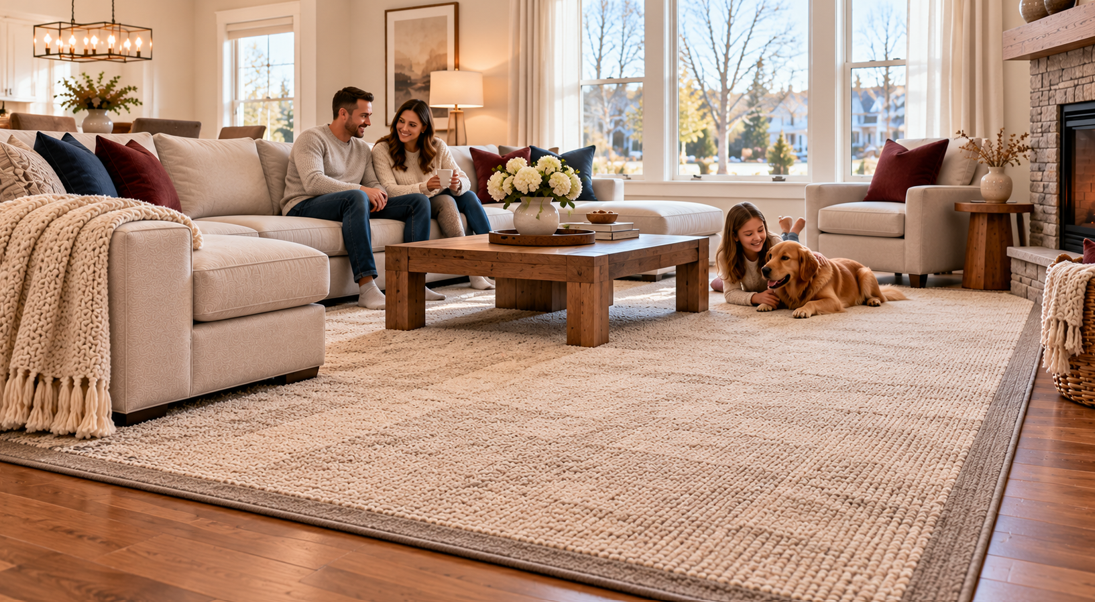
A living room in Spring Hill often does a lot of work. It is where families gather after school, where friends settle in for a game day, and where the dog claims a favorite corner by the window. The right rug ties all of that together, and size is the single biggest factor in whether it looks intentional or out of place. At Floorz, our design team has spent more than 30 years helping Middle Tennessee homeowners choose rugs that fit their rooms, their furniture and the way they live. This guide walks through how to size a custom rug so your living room feels balanced, comfortable and complete.
Why Rug Size Matters More Than Pattern
Many homeowners start with color or pattern, then discover that a beautiful rug looks lost in the room. A rug that is too small makes furniture appear to float and can make a generous living room feel cramped. A rug that is too large can swallow the floor and hide the hardwood or tile you invested in.
Getting the size right does three jobs at once:
It anchors the seating area so the room has a clear center.
It sets the visual proportions between furniture, walls and open floor.
It creates a comfortable, defined zone in open floor plans, which are common in newer homes.
Start With How the Room Is Used
Before you measure, think about how the room functions day to day. Ask yourself a few questions:
Where do people walk through the room?
Which pieces of furniture define the main conversation area?
Will the rug sit near an entry, patio door or kitchen?
Do children or pets spend a lot of time on the floor?
Your answers point toward the right footprint. A rug in a high-traffic family room may need to stop short of a walkway, while a rug in a quieter living room can stretch closer to the walls.
Three Common Furniture Layouts
All Legs On
In this layout, every leg of the sofa and chairs rests on the rug. It creates a generous, luxurious feel and works well in larger living rooms. Leave about 12 to 18 inches of exposed floor between the rug and the walls so the room still has a border.
Front Legs On
Here, the front legs of the sofa and chairs sit on the rug while the back legs rest on the floor. This is the most flexible option and suits most living rooms. It connects the seating group without requiring a very large rug.
Floating Rug
A smaller rug sits under the coffee table with furniture around it. This approach can work in compact rooms, but it often looks undersized. If you choose it, make sure the rug is at least as wide as the sofa minus a few inches on each side.
How to Measure Your Living Room
Measuring well saves time and gives you a rug that fits from day one. Follow these steps:
Measure the full length and width of the room, wall to wall.
Measure the seating group, including sofa, chairs and side tables.
Mark the rug edges on the floor with painter's tape based on your preferred layout.
Walk around the taped area for a day or two to see how it feels in real life.
Note doors, vents and floor transitions that the rug needs to clear.
Standard Sizes vs. Custom Sizes
Standard rug sizes such as 8 by 10 or 9 by 12 work in many homes, but living rooms are not always standard. Bay windows, fireplaces, built-ins and open layouts can leave a standard rug either too tight or too loose.
That is where custom area rugs make a real difference. A custom rug is sized to your exact measurements, so it can:
Fit neatly between a fireplace hearth and a sectional.
Align with an architectural feature such as a beam or window wall.
Define a seating zone in an open plan without crowding the kitchen or dining area.
Work with unusual room shapes, including long, narrow living spaces.
Spacing Rules That Keep a Room Balanced
A few simple guidelines help the final rug look polished:
Leave 12 to 18 inches of floor between the rug and walls in most rooms.
In smaller rooms, 8 to 10 inches of border can still look balanced.
Keep at least 24 inches of clear walkway around furniture where people pass.
Center the rug on the seating area rather than the room if the two differ.
Extend the rug about 6 to 8 inches beyond each end of the sofa.
These measurements create breathing room, which is what makes a space feel calm and finished.
Choosing Materials for Busy Homes
Size and material go hand in hand. Middle Tennessee summers bring humid, sticky days, and spring storms often mean muddy shoes and wet paws coming through the door. Many local families also have kids and pets.
Consider these options:
Wool: Naturally resilient, soil-resistant and comfortable underfoot. A beautiful choice for living rooms that see daily use.
Solution-dyed synthetics: Fade-resistant and easy to clean, which suits rooms with lots of sunlight or frequent spills.
Low or flat weaves: Easier to vacuum and less likely to trap pet hair.
Blends: Combine softness with added durability for active homes.
A quality rug pad keeps the rug in place and protects the floor below.
Common Sizing Mistakes to Avoid
Choosing a rug that only fits under the coffee table in a large room.
Letting the rug run under doors or into walkways.
Matching the rug to the room size instead of the seating group.
Bringing It All Together
A well-sized rug makes a Spring Hill living room feel welcoming, organized and complete. Start with how you use the space, choose a furniture layout, measure carefully and consider a custom size when a standard rug does not fit. With the right materials, your rug will stay beautiful through humid summers, busy holidays and everyday family life.
Our in-house design team can help you visualize the right size, bring samples to your home and create a custom rug that fits your space perfectly. Visit our Brentwood showroom at 1731 Mallory Lane, Suite 103, call (615) 771-7669 or Get in touch to book a free in-home estimate today.


