

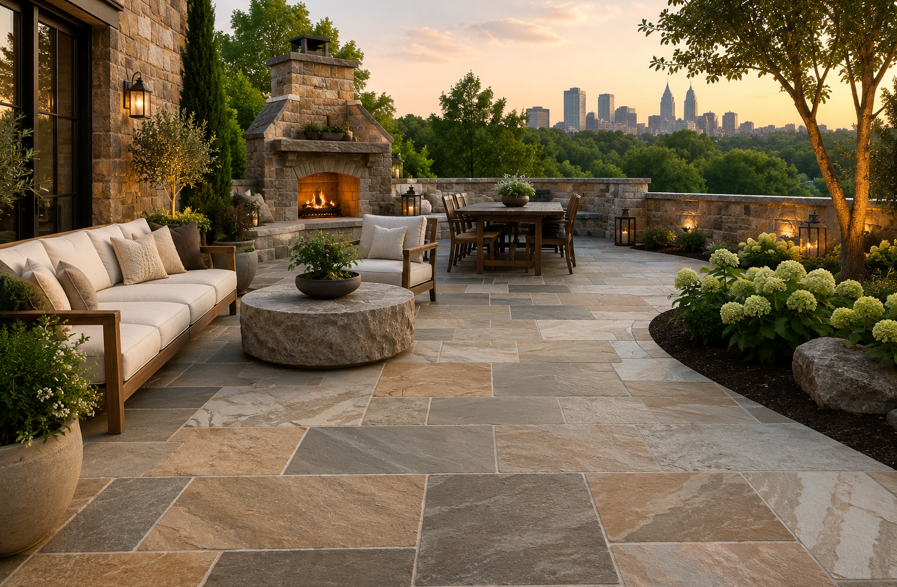
A well-designed patio can become one of the most inviting spaces in a home. It might be where the family gathers for summer dinners, where friends settle in around an outdoor fireplace, or simply where you enjoy a quiet morning surrounded by the landscape. Whatever its purpose, the flooring beneath it plays an important role in how the space looks, feels, and performs.
For Nashville homeowners, natural stone offers an especially appealing combination of character and durability. Its organic colour variation, tactile surfaces, and timeless appearance can make an outdoor space feel connected to the home while still belonging naturally to the landscape.
At Floorz, more than 30 years of flooring and design experience in Middle Tennessee have shown that a beautiful outdoor surface needs to do more than look impressive. It should complement the architecture, suit the way the space will be used, and account for the region's humidity, rainfall, changing seasons, and everyday wear.
If you are planning a new patio or updating an existing outdoor living area, natural stone can provide a sophisticated foundation that feels distinctive without becoming overly formal.
Why Natural Stone Works So Well Outdoors
Few flooring materials feel as naturally suited to an outdoor environment as stone.
Each piece carries its own pattern, texture, shading, and mineral character. Rather than looking manufactured or completely uniform, stone introduces variation that works particularly well alongside landscaping, timber, brick, water features, and other organic materials.
That variation also makes a patio feel established. Even in a newly completed outdoor space, natural stone can bring a sense of permanence and architectural depth.
The appeal is not limited to traditional homes, either.
Stone can support a wide range of design styles, from classic Southern architecture to modern outdoor living areas with clean lines and minimal furnishings. The final effect depends on the type of stone, its colour, pattern, finish, scale, and installation layout.
A softly textured stone in warm earthy shades might create a relaxed, garden-inspired retreat. A larger-format installation with restrained colour variation can feel more contemporary. A richer stone with distinctive movement can make the patio itself a major design feature.
The versatility is one of natural stone's greatest strengths.
Outdoor Living Deserves the Same Design Attention as the Interior
Homeowners increasingly treat patios as extensions of their indoor living areas rather than completely separate spaces.
That shift changes the way flooring should be selected.
Instead of asking only whether an outdoor material is durable, it is worth considering how it relates to the rooms inside the home. If a kitchen or living room opens directly onto the patio, the transition between interior and exterior finishes becomes part of the overall design.
The materials do not need to match exactly.
In fact, a slight contrast can help distinguish the spaces while maintaining continuity. A warm hardwood interior might transition beautifully to natural stone with similar earthy undertones. A kitchen featuring stone countertops or a stone backsplash may provide inspiration for the colours used outside.
The goal is to create a visual relationship.
Repeated tones, textures, or materials can make the outdoor area feel intentional rather than added later.
Furniture matters too. Before choosing a stone, consider the colours and materials likely to appear in outdoor seating, dining tables, planters, lighting, cushions, and architectural features.
Stone is a long-term surface, so it should provide a foundation that can accommodate design changes over time.
Choosing the Right Stone for an Outdoor Patio
Natural stone is a broad category, and different options create very different aesthetics and performance characteristics.
The best choice depends on where the patio is located, how exposed it will be, the desired appearance, and the specific requirements of the project.
Travertine
Travertine is often associated with warm, relaxed luxury.
Its creamy beige, tan, and earthy variations can complement traditional homes, Mediterranean-inspired spaces, pools, gardens, and patios where homeowners want a natural, softly aged appearance.
The visual character of travertine can make an outdoor area feel inviting rather than formal. It works especially well with timber furniture, soft neutral upholstery, greenery, and warm architectural finishes.
Because stone selection and finish influence how a surface behaves outdoors, the specific travertine product should be evaluated for the intended application rather than selected on colour alone.
Slate
Slate can bring a more textured, distinctive personality to a patio.
Depending on the product, its colours may include charcoal, grey, rust, green, brown, or other naturally occurring variations. That mix can create an outdoor surface with significant depth and movement.
Slate can suit homes where the goal is to create a stronger relationship between the patio and the surrounding landscape.
It may also appeal to homeowners who want something less uniform than a simple neutral surface.
With a material that can vary considerably in texture and composition, professional product selection becomes particularly important.
Granite
Granite can create a strong, substantial outdoor aesthetic.
Its dense visual character and naturally occurring pattern can work well in patios where homeowners want the flooring to feel architectural and enduring.
Depending on colour and finish, granite can lean traditional or contemporary.
A quieter grey or neutral palette can support a modern design, while richer natural variation can complement classic architecture and more layered outdoor spaces.
Marble
Marble is synonymous with elegance, but outdoor applications require thoughtful selection.
Its distinctive veining and refined appearance can be striking in covered patios, courtyards, and sophisticated entertaining areas. However, the specific stone, finish, exposure, maintenance expectations, and installation conditions all need to be considered.
The most luxurious material is not automatically the most appropriate choice for every space.
Successful outdoor design comes from matching the stone to the project rather than choosing based on appearance alone.
Finish Matters as Much as Colour
When homeowners shop for stone, colour often receives most of the attention.
For an outdoor patio, finish deserves just as much consideration.
A polished stone that looks beautiful in an interior may not create the same experience outdoors. Exterior areas can become wet from rain, pool water, cleaning, or morning moisture, so the surface characteristics of the material matter.
More textured finishes can offer a different feel underfoot while also creating a more natural visual effect.
The finish can also affect how sophisticated or relaxed the patio appears.
A smoother surface may feel cleaner and more architectural. A textured or softly weathered appearance can blend more naturally with landscaping and traditional exteriors.
There is no universal best finish. The right decision depends on where the material will be installed and how the space will function.
When exploring Natural Stone, it helps to compare colour, texture, scale, finish, and variation together rather than treating each characteristic as a separate decision.
Designing for Middle Tennessee Weather
Outdoor flooring in Middle Tennessee experiences conditions that indoor flooring does not.
Summers can be humid and wet. Rain can introduce frequent moisture. Seasonal temperature changes mean exterior materials and installation systems need to be selected with outdoor conditions in mind.
That does not mean natural stone should be avoided.
It means the design process should consider more than appearance.
The stone itself, installation method, surface finish, drainage, underlying structure, and degree of exposure can all influence long-term performance.
Covered patios will experience different conditions from uncovered terraces. An outdoor kitchen may have different requirements from a quiet seating area. A patio beside a pool needs to be considered differently from a space protected by a roof.
Even the surrounding landscape matters. Trees, shade, irrigation, and water movement around the home may affect how frequently the surface is exposed to moisture or debris.
A local flooring professional can help evaluate these conditions before material decisions are finalised.
Good Drainage Is Part of Good Patio Design
One of the most important aspects of any exterior flooring project is managing water properly.
A patio is exposed to rain in ways that interior floors are not, so drainage should be addressed during planning and installation.
Water should not simply be allowed to collect on the surface or remain where it can create maintenance and performance issues.
The design of the patio, slope, substrate, installation system, and surrounding landscape all contribute to how water moves away from the space.
This is one reason professional installation is particularly valuable with natural stone.
A beautifully selected stone still depends on the construction beneath it.
The visible surface may be what homeowners notice first, but the long-term quality of an outdoor project is strongly influenced by preparation and installation details that are largely hidden after the work is completed.
Use Stone to Create Outdoor “Rooms”
One of the best ways to design a large patio is to think of it as a series of rooms.
Inside the home, flooring helps define how different areas connect. Outdoors, the same principle can be used to organise spaces for dining, cooking, conversation, relaxation, and entertaining.
Natural stone can help create that structure.
A consistent stone surface across the patio can visually connect each zone while furniture and architectural elements establish different functions.
Alternatively, changes in stone pattern, borders, size, or layout can subtly define one area from another.
For example, an outdoor dining table can feel more anchored when the flooring layout reinforces its placement. A fireplace seating area can become a focal point when stone is coordinated with the hearth or surrounding structure.
The result should feel cohesive rather than overly segmented.
The flooring provides the foundation, while furniture, lighting, landscaping, and accessories complete each outdoor room.
Pair Natural Stone With the Architecture of Your Home
A patio should feel like it belongs to the house.
That does not mean copying the exterior materials exactly. It means understanding the architectural language already present.
Brick homes may pair beautifully with stone containing warm brown, cream, or softly varied tones. Painted exteriors can provide more freedom to introduce natural colour. Contemporary architecture may benefit from larger formats and restrained palettes, while traditionally influenced homes can accommodate more texture and tonal movement.
Consider permanent exterior features before making a flooring selection:
Brick or stone façades
Exterior paint colour
Columns and trim
Outdoor fireplaces
Retaining walls
Steps
Pool surrounds
Outdoor kitchens
Timber structures
Existing pathways
A stone that looks beautiful on its own may not be the strongest choice if its undertones compete with these elements.
Good design comes from seeing the whole property rather than selecting materials individually.
Think Beyond Beige
Natural stone is often associated with beige and tan, but the category offers much more variation.
Warm neutrals remain popular because they work easily with outdoor furniture and landscaping, yet greys, charcoals, soft creams, mixed earth tones, and more character-rich options can create very different moods.
A pale warm stone can make a patio feel bright and open.
A medium earthy tone can feel relaxed and forgiving.
Deeper shades may create stronger contrast against light exterior walls and greenery.
Mixed natural colouring can give a patio movement and character.
The best palette depends on what already surrounds the space.
Colour should also be viewed outdoors whenever possible. Direct sunlight, shade, evening light, and nearby greenery can change how a material appears compared with showroom lighting.
Add Warmth With Rugs, Furniture, and Textiles
Stone creates a strong architectural foundation, but outdoor spaces usually feel most inviting when hard surfaces are balanced with softer materials.
Outdoor rugs can help define seating or dining zones while adding pattern and colour.
Upholstered seating introduces comfort and gives homeowners an opportunity to repeat colours from the interior.
Timber furniture pairs naturally with stone because both materials introduce organic variation.
Planters, greenery, cushions, throws, lanterns, and decorative objects can make the space feel layered and personal.
This approach is particularly useful when designing a patio intended for year-round visual appeal. Even when the space is used less frequently during colder months, a strong combination of flooring, structure, and landscaping can make it an attractive feature when viewed from inside the home.
Outdoor Kitchens and Natural Stone
Outdoor kitchens place additional demands on patio flooring.
The surface needs to support the overall design while fitting the practical requirements of a space used for cooking, dining, and entertaining.
Consider how the floor relates to countertops, cabinetry, grills, masonry, and nearby dining furniture.
Matching every stone surface exactly is rarely necessary. In many cases, a layered approach produces a more sophisticated result.
For example, a countertop with prominent movement may work best with a quieter patio floor. If the flooring already contains significant colour variation, simpler countertop materials can provide balance.
The relationship between the materials matters more than exact matching.
Homeowners should also think about circulation. Outdoor kitchens often become high-traffic areas during gatherings, so furniture placement, walking paths, surface selection, and maintenance expectations all deserve attention during planning.
Natural Stone Around Outdoor Fireplaces
An outdoor fireplace can become the visual centre of a patio.
Stone flooring provides an opportunity to connect the fireplace with the rest of the environment without making every surface identical.
A fireplace clad in a textured stone may be paired with a calmer flooring material that shares one or two colours. Alternatively, a simple fireplace design can allow the patio floor to introduce more natural variation.
Warm stone works particularly well around fire features because the combination naturally creates a sense of comfort.
Add deep seating, layered lighting, and soft textiles, and the area can feel like an outdoor version of an interior living room.
That balance between architecture and comfort is what turns a patio into a space people genuinely want to use.
Maintenance Should Influence the Decision
Natural stone is valued for its durability and character, but every material has maintenance requirements.
Those requirements vary depending on the type of stone, surface finish, installation, location, and degree of exposure.
Some products may benefit from sealing as part of their care routine. Outdoor surfaces will also need periodic cleaning to remove dirt, leaves, pollen, and other debris.
The important thing is to understand the maintenance expectations before installation.
Homeowners who enjoy the organic character of natural materials may be comfortable with the way stone evolves over time. Others may prefer an option with a more consistent appearance or simpler maintenance expectations.
Neither approach is wrong.
A successful flooring choice reflects both aesthetic preferences and the amount of ongoing care that fits comfortably into the homeowner's lifestyle.
Professional Installation Protects the Design
Natural stone is an investment, and installation is part of that investment.
Exterior projects require careful planning because the flooring needs to work with the structure and conditions beneath it. Surface preparation, layout, drainage, material variation, cuts, transitions, and installation methods all contribute to the finished result.
Stone itself also requires design judgement.
Because pieces naturally vary, installers may need to consider how colours and patterns are distributed across the patio so that the finished surface feels balanced.
That craftsmanship is particularly noticeable in large spaces.
Small details such as how stone meets a doorway, step, column, fireplace, or outdoor kitchen can determine whether the final project feels polished.
Professional installation helps ensure that the design imagined during material selection carries through to the completed patio.
Create a Patio That Feels Like Part of the Home
The most successful outdoor spaces do not feel like an afterthought.
They reflect the same attention to material, colour, proportion, and lifestyle that goes into designing the rooms inside.
Natural stone can make that connection beautifully.
Its organic variation works naturally with landscaping, while its visual depth can complement both traditional and contemporary architecture. With thoughtful selection, it can support a relaxed family patio, an elegant entertaining space, an outdoor kitchen, a fireplace retreat, or a combination of several functions.
For Nashville homeowners, the key is balancing design with the realities of Middle Tennessee's climate. Stone type, finish, exposure, drainage, maintenance, and professional installation should all be considered alongside colour and style.
With more than 30 years of experience serving Middle Tennessee, Floorz helps homeowners approach flooring as part of the complete design of their space. From selecting stone that complements your home's architecture to planning an outdoor surface suited to everyday living, the team can help turn a patio into a true extension of the home.
If you are considering natural stone for a new or renovated outdoor space, schedule a free estimate to explore materials and design options for your Nashville property.


