

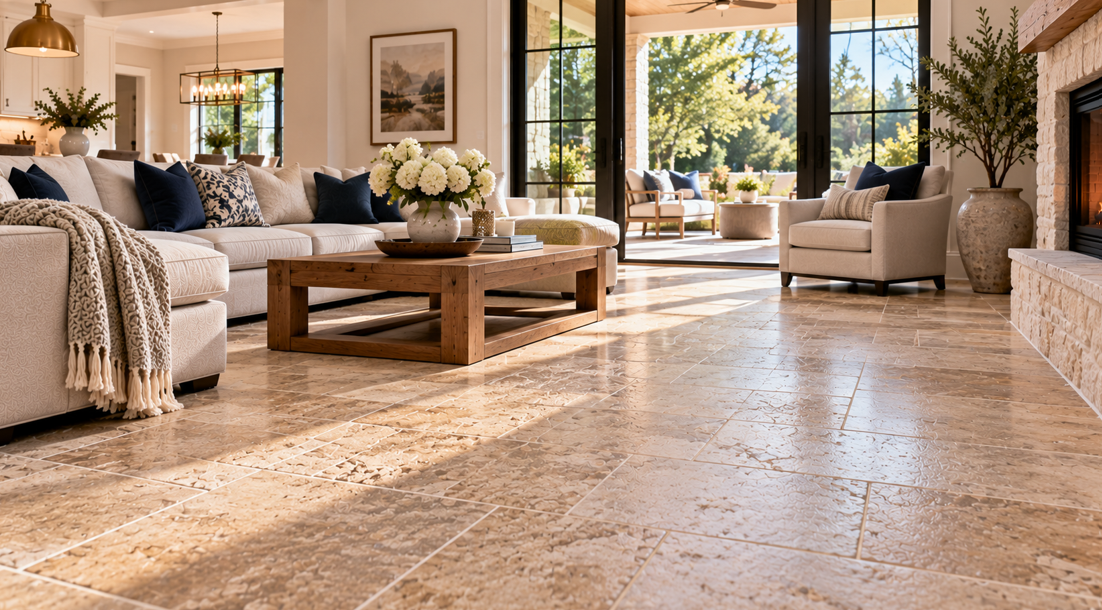
Natural stone brings a timeless, elegant look to any home, and it pairs beautifully with the traditional and Southern heritage architecture found throughout Brentwood. Many homeowners love the idea of marble, travertine or slate underfoot but wonder how stone holds up during long, humid Middle Tennessee summers. At Floorz, we have more than 30 years of experience installing flooring in local homes, and we know that stone and humidity can work very well together with the right choices. This guide explains how moisture affects natural stone and how to keep your floors looking their best year-round.
How Humidity Affects Natural Stone
Unlike wood, natural stone does not swell or cup when the air is damp. That alone makes it a strong option for Tennessee homes. However, stone is porous to varying degrees, and humidity can still influence how it looks and performs.
Here is what moisture can do over time:
Darken or shade porous stones such as limestone and some travertine.
Encourage efflorescence, a white powdery residue that rises from the substrate.
Make polished surfaces feel slick when condensation forms.
Allow mildew to develop in grout lines in poorly ventilated rooms.
The good news is that each of these can be prevented or managed with good selection, proper installation and simple routine care.
Choosing the Right Stone for Brentwood Homes
Different stones absorb moisture at different rates. Understanding the difference helps you match the stone to the room.
Granite
Granite is dense and has low porosity, which makes it one of the most moisture-resistant stones available. It suits entryways, kitchens and mudrooms where rain and spring storms bring water indoors.
Slate
Slate has a naturally textured surface and good water resistance. It offers excellent grip, which is helpful in bathrooms and near patio doors during wet seasons.
Marble
Marble is softer and more porous than granite. It is a beautiful choice for formal living areas, foyers and primary bathrooms, but it benefits from consistent sealing in humid conditions.
Travertine
Travertine has natural pores and holes that are typically filled during manufacturing. Filled and honed travertine performs well in local homes, especially with a quality sealer.
Limestone
Limestone offers a soft, warm look that suits farmhouse and European-inspired interiors. It is among the more porous options, so it works best in lower-moisture rooms with regular sealing.
Installation Makes the Difference
Even the best stone can have problems if the installation does not account for moisture. Professional installation focuses on what sits beneath the surface.
Key steps include:
Testing the subfloor: Concrete slabs and crawl spaces can hold moisture. Testing confirms whether a barrier is needed.
Using a moisture barrier or uncoupling membrane: This helps prevent moisture from wicking up into the stone and reduces the risk of cracking.
Choosing the right setting material: White thinset is often recommended for light marbles to avoid staining or shadowing.
Allowing proper cure time: Rushing grout and sealer in humid weather can trap moisture.
Our installers understand Middle Tennessee's damp summers and wet springs, and they plan each project around those conditions.
Sealing: Your Best Defense
Sealing is the most important step in protecting natural stone flooring from humidity and spills. A penetrating sealer soaks into the stone and reduces how much water and oil it absorbs, without changing the surface feel.
Helpful sealing tips:
Seal after installation once the stone and grout are fully dry.
Reseal every one to three years depending on the stone and how much traffic the area receives.
Test the seal by placing a few drops of water on the surface. If it darkens within minutes, it is time to reseal.
Seal grout lines too, since they are often more absorbent than the stone itself.
Finish Choices for Humid Climates
The finish you select affects both appearance and performance.
Polished: High shine and rich color, best for formal rooms with low moisture.
Honed: A soft matte surface that hides wear and offers better grip.
Tumbled: A textured, aged look that suits rustic and farmhouse spaces.
Brushed or flamed: Extra texture for slip resistance in wet areas.
For bathrooms, entryways and rooms that open onto a patio, honed or textured finishes are often the most practical.
Managing Indoor Humidity
Stone performs best when indoor humidity stays steady. A few habits make a noticeable difference during the warm months:
Keep indoor humidity between 40 and 55 percent with your HVAC system or a dehumidifier.
Run bathroom exhaust fans during and after showers.
Place absorbent mats at exterior doors during rainy weeks.
Wipe up standing water promptly, especially on polished surfaces.
Everyday Care for Lasting Beauty
Natural stone is durable, and simple care keeps it looking beautiful for decades. A little attention each week protects your investment and preserves the natural character that drew you to stone in the first place:
Dust mop or vacuum regularly to remove grit that can scratch.
Clean with a pH-neutral stone cleaner rather than vinegar or acidic products.
Use felt pads under furniture legs.
Place rugs or runners in busy hallways and in front of the kitchen sink.
Schedule professional deep cleaning and resealing as needed.
Bringing Stone Into Your Home
Natural stone is a lasting investment that adds character and value to any home. With the right material, a moisture-aware installation and a regular sealing routine, it handles Tennessee humidity with ease. Whether you are dreaming of a marble foyer, a slate mudroom or a travertine primary bath, our design team can guide you toward the right stone and finish for each room.
Visit our showroom at 1731 Mallory Lane, Suite 103, in Brentwood to see and feel our stone collection in person, or call (615) 771-7669. Reach out to us to schedule your free in-home estimate today.


