

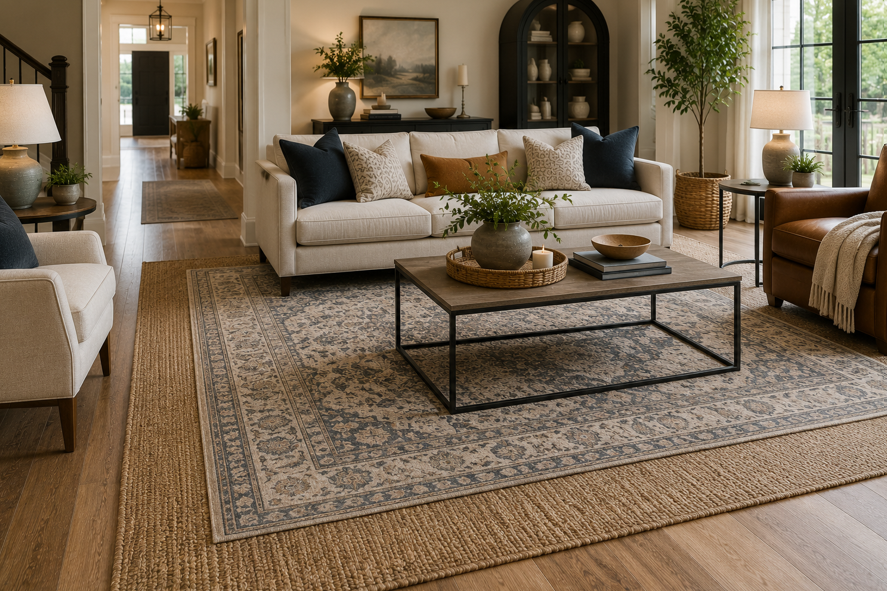
Layering Area Rugs: Design Tips for a More Beautiful Home
Area rugs have always been one of the most powerful tools in interior design. They add warmth, colour, softness, texture, and personality to a room without requiring a major renovation. In recent years, one rug styling technique has become especially popular among homeowners who want their spaces to feel more curated and design-led: layering area rugs.
Layering rugs means placing one rug over another to create added depth, contrast, and visual interest. It can make a room feel more finished, more personal, and more inviting. This approach works beautifully in living rooms, bedrooms, dining areas, reading corners, entryways, and open-plan spaces where homeowners want to define zones while still keeping the overall design cohesive.
For homeowners who love interiors that feel warm, elegant, and lived-in, layered rugs offer a flexible way to update a room. They are especially useful in Middle Tennessee homes, where hardwood, natural stone, and waterproof flooring often create a beautiful foundation but may need softness and comfort underfoot during cooler seasons or in family spaces.
With more than 30 years of design-focused flooring experience, Floorz helps homeowners think beyond flooring alone. The right rug can protect a surface, anchor furniture, introduce colour, and connect the whole room together.
Why Layer Area Rugs?
Layering area rugs is popular because it gives a room a designer look without making the space feel overly formal. A single rug can anchor a room, but layered rugs can create a more collected, thoughtful appearance.
This technique is especially helpful when a room feels too plain, too large, or too visually flat. A base rug can add size and structure, while a smaller top rug can bring colour, pattern, or texture. Together, they create a richer and more personalised design.
Layered rugs can help:
Define separate zones in open-plan spaces
Add softness over hard flooring
Introduce colour without overwhelming the room
Protect high-traffic areas
Highlight furniture arrangements
Bring warmth to neutral interiors
Make a room feel more custom and complete
For many homeowners, layering rugs is also a practical solution. If you have a beautiful vintage rug that is too small for a large room, placing it over a larger neutral rug can make it work. If you want pattern but do not want a full room-sized patterned rug, layering lets you use a bolder piece in a more balanced way.
Start with the Right Foundation Rug
The foundation rug is the larger rug on the bottom. It sets the scale for the room and creates the base for the layered look. Because it covers more floor space, this rug is usually more neutral, subtle, or textural.
Natural fibre rugs are popular as foundation rugs because they add texture without competing with furniture or décor. Jute, sisal, wool blends, and flatweave styles can work well depending on the room and lifestyle. A soft neutral wool rug can also make a beautiful base for more elegant interiors.
When choosing a foundation rug, consider:
Room size
Furniture layout
Flooring material
Traffic level
Comfort underfoot
Colour palette
The rug that will sit on top
A good foundation rug should feel calm and versatile. It should support the top rug rather than compete with it. In a living room, the foundation rug should usually be large enough to sit under at least the front legs of the main furniture pieces. In a bedroom, it should extend beyond the bed enough to provide softness when stepping out.
Choose a Top Rug with Character
The top rug is where you can add more personality. This might be a vintage rug, a patterned rug, a handwoven piece, a colourful accent, or a rug with a special texture. Because the top rug is smaller, it can be more expressive without overwhelming the room.
A top rug can introduce:
Pattern
Colour
Contrast
Heritage character
Softness
A focal point
Seasonal style
For example, a neutral jute rug layered with a vintage Persian-style rug can create a warm and collected feel. A simple wool foundation rug with a bold geometric rug on top can feel more modern. A textured base with a soft hide or organic-shaped accent rug can create a relaxed, layered look.
When selecting Area Rugs, think about how the two rugs will work together. They do not need to match exactly. In fact, layered rugs often look best when they contrast slightly. The key is to make sure they share at least one common element, such as colour family, texture, tone, or style.
Use Rug Layering to Define Open-Plan Spaces
Many modern homes have open layouts where the kitchen, dining, and living areas flow together. While this creates a spacious and connected feel, it can also make furniture arrangements look less defined. Area rugs help solve that problem.
Layering rugs can make each zone feel intentional. In a living area, a large neutral rug can define the seating arrangement, while a smaller patterned rug can centre the coffee table. In a dining space, a single large rug may be more practical, but a subtle layered effect can work if the rugs are flat enough and easy to move chairs across.
For open-plan interiors, rug layering can help create visual boundaries without adding walls or heavy furniture. This is especially useful when the flooring continues from one area to another. Hardwood, natural stone, and waterproof flooring can create beautiful flow, while rugs add comfort and structure.
The goal is to keep the space connected while giving each area its own purpose.
Match Rug Texture to the Room’s Function
Texture is one of the most important parts of successful rug layering. A room can feel much richer when it includes different tactile surfaces, such as smooth hardwood, woven rugs, upholstered furniture, linen curtains, and natural wood accents.
However, texture should also suit the room’s function.
In a formal living room, a soft wool rug over a subtle foundation rug can feel refined and comfortable. In a busy family room, a flatter, more durable combination may be easier to maintain. In a bedroom, a plush top rug can add softness and warmth. In an entryway, low-profile rugs are usually better because they are easier to walk on and less likely to catch at the door.
Middle Tennessee homes experience four distinct seasons, from humid summers to cooler winters. Layered rugs can make interiors feel cosier during colder months while still being easy to adjust when the weather warms up. This makes them a flexible styling choice for homeowners who enjoy refreshing their spaces seasonally.
Keep the Colour Palette Balanced
Colour is where rug layering can either feel beautiful or become too busy. A layered rug arrangement should feel intentional, not accidental.
If your furniture and walls are neutral, you may have more freedom to use a patterned or colourful top rug. If the room already has bold artwork, patterned curtains, or colourful upholstery, a quieter rug combination may work better.
A simple approach is to choose one dominant neutral and one accent tone. For example, a natural beige foundation rug might pair beautifully with a top rug that includes rust, blue, olive, or soft red. Another option is to layer tone-on-tone rugs, such as cream over beige, taupe over ivory, or charcoal over grey.
In Brentwood interiors, many homeowners prefer designs that feel elegant, warm, and timeless. Soft neutrals, warm woods, muted blues, earthy greens, antique-inspired reds, and natural textures can all work well with layered rugs.
The best rug combination should complement the room’s existing flooring, furniture, and lighting.
Layer Rugs Over Hardwood Flooring
Hardwood flooring and area rugs are a natural pairing. Hardwood brings warmth and character, while rugs add comfort, protection, and design definition.
Layered rugs can be especially useful over hardwood because they help protect high-traffic areas and soften the sound of footsteps. They can also prevent large rooms from feeling echoey or unfinished.
When layering rugs over hardwood, use a proper rug pad beneath the base rug. This helps prevent slipping, protects the floor finish, and keeps the rugs sitting smoothly. A rug pad can also add cushioning, which makes the room feel more comfortable.
Avoid rug backings or pads that may damage the hardwood finish. The right pad matters, especially if the rug will stay in place for a long time.
A layered rug arrangement can also help highlight the beauty of hardwood rather than hide it. Leaving enough floor visible around the rugs allows the wood to frame the design.
Layer Rugs Over Natural Stone and Tile
Natural stone and tile floors bring elegance, durability, and architectural character to a room. However, they can sometimes feel cool or firm underfoot. Area rugs soften that effect while adding warmth and texture.
Layering rugs over stone or tile can make a room feel more welcoming. A large foundation rug can reduce the coolness of the surface, while a smaller top rug can introduce pattern or colour.
This is especially effective in living rooms, bedrooms, and seating areas where comfort matters. In kitchens or bathrooms, rug layering should be used carefully because moisture and cleaning needs are different. Low-profile, easy-care rugs are usually better for these spaces.
When using rugs over stone or tile, rug pads are important for safety. Hard surfaces can make rugs more likely to slide, so proper grip and placement are essential.
Use Layered Rugs to Refresh a Room Without Renovating
One of the best things about layered rugs is that they can change the feel of a room without changing the flooring, furniture, or paint colour. This makes them ideal for homeowners who want a design refresh without committing to a full renovation.
A room that feels too plain can gain instant depth with a textured base rug and patterned top rug. A room that feels too formal can become softer with natural fibres. A room that feels too modern can gain warmth with a vintage-inspired rug. A room that feels too dark can be lightened with a pale foundation rug.
Layering also makes it easier to update a space seasonally. You might use a lighter, natural top rug in spring and summer, then switch to a richer wool or vintage piece in autumn and winter.
This flexibility makes area rugs a practical design investment.
Common Rug Layering Mistakes to Avoid
Layering rugs should look effortless, but it still requires planning. Some common mistakes can make the room feel cluttered or awkward.
One mistake is choosing rugs that are too close in size. If the top rug is only slightly smaller than the base rug, the layering may look accidental. There should be enough visible border to make the design feel intentional.
Another mistake is combining too many strong patterns. Pattern mixing can work, but it needs balance. If both rugs are bold, they should share a colour palette or design rhythm.
A third mistake is using rugs that are too thick together. This can create tripping hazards, make furniture sit unevenly, or cause doors to catch.
Homeowners should also avoid ignoring the furniture layout. Rugs should relate to the room’s main furniture pieces. A rug floating in the middle of a room without connection to seating, a bed, or a table can feel disconnected.
Best Rug Pairings for Different Interior Styles
Layered rugs can suit many design styles when the materials and colours are chosen carefully.
For modern farmhouse interiors, try a natural jute or sisal foundation rug with a soft vintage-inspired top rug. This creates a balance of relaxed texture and traditional pattern.
For classic Southern interiors, a wool foundation rug layered with an antique-style or Oriental rug can feel elegant and timeless.
For modern interiors, choose a flat neutral base and a geometric top rug with clean lines and restrained colour.
For transitional homes, combine a soft neutral foundation with a patterned rug that includes both traditional and contemporary elements.
For cosy bedrooms, layer a large wool or neutral rug under the bed with a smaller soft rug placed where your feet land in the morning.
The best combinations feel connected to the architecture and furniture already in the home.
Think About Scale and Furniture Placement
Scale is essential when layering rugs. The base rug should be large enough to anchor the room. The top rug should be large enough to feel purposeful, but small enough to let the base rug show.
In a living room, the base rug should usually extend beyond the coffee table and under the front legs of sofas or chairs. The top rug can sit centred beneath the coffee table or slightly angled for a more relaxed look.
In a bedroom, the base rug can sit under the bed and extend beyond the sides. A smaller top rug can be placed at the foot of the bed or layered on one side to add texture.
In an entryway, a large flatweave base can be layered with a smaller decorative rug, but both should remain low-profile and secure.
Rug layering works best when it supports how people actually move through the room.
Care and Maintenance for Layered Rugs
Layered rugs require regular care to keep them looking fresh. Because one rug sits over another, dust and debris can collect between layers. Homeowners should lift and vacuum both rugs periodically.
Basic care tips include:
Vacuum regularly using the right setting
Rotate rugs to balance wear
Use rug pads to prevent slipping
Clean spills promptly
Follow care instructions for each material
Avoid placing delicate rugs in heavy-use areas
Have valuable rugs professionally cleaned when needed
Homes with pets may need more frequent cleaning, especially in family rooms and entryways. Choosing forgiving colours, durable fibres, and washable or easy-care options can make maintenance simpler.
When to Work with a Design Expert
Layering rugs may seem simple, but getting the size, texture, colour, and placement right can be challenging. A design expert can help homeowners choose combinations that look intentional and suit the room’s proportions.
This is especially valuable when working with open-plan layouts, custom furniture, premium hardwood floors, or natural stone surfaces. The rug should enhance the flooring, not fight against it.
A design-focused flooring team can also help homeowners understand rug materials, durability, maintenance, and placement. That guidance helps ensure the finished room feels polished, practical, and personal.
Bring More Texture and Warmth into Your Home
Layering area rugs is one of the most effective ways to create a room that feels warm, designed, and complete. Whether you want to soften hardwood flooring, add comfort over natural stone, define an open-plan living space, or showcase a favourite vintage rug, layering can make your interior feel more personal and refined.
The best layered rug designs balance texture, scale, colour, comfort, and everyday practicality. They should support the way your home looks and the way your household lives.
Floorz brings more than 30 years of flooring and design expertise to homeowners across Middle Tennessee. If you are ready to explore designer rugs, custom options, and styling guidance for your home, visit the showroom or request a free estimate to begin planning a more beautiful interior.


