

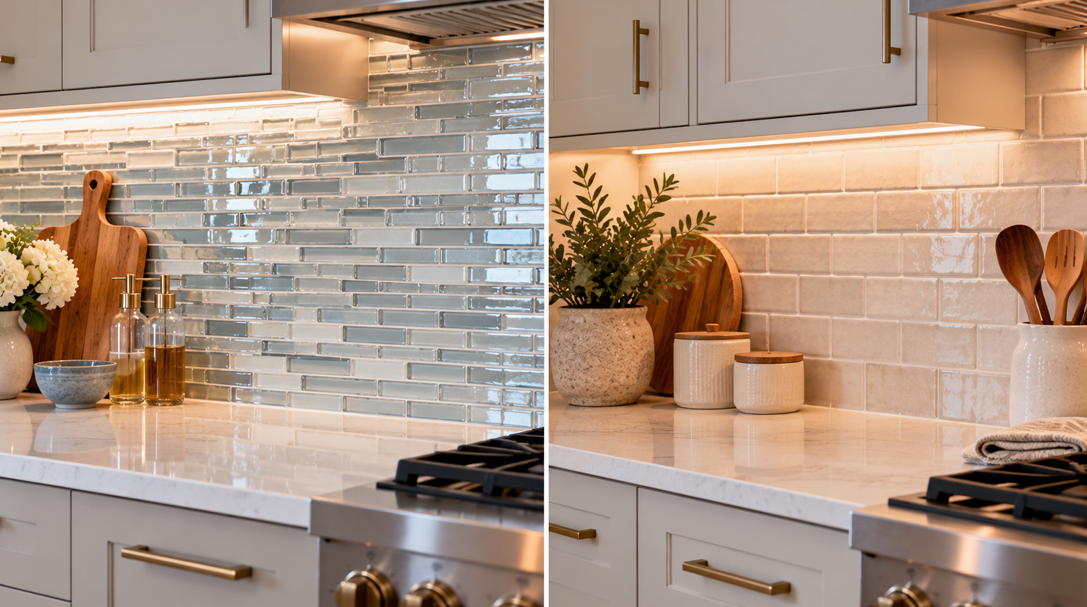
Homeowners in Franklin take great pride in their interiors, from historic downtown homes to newer builds in growing neighborhoods. When it comes to kitchens, bathrooms and accent walls, two tile options come up again and again: glass and ceramic. Both are beautiful and durable, yet they differ in look, performance and where they shine. At Floorz, our design team has guided Middle Tennessee families through tile decisions for more than 30 years. This comparison will help you decide which tile suits each space in your home.
What Is Glass Tile?
Glass tile is made from fused glass, often with color applied to the back or blended throughout. It reflects light, which gives it a luminous, almost jewel-like quality. Glass tile comes in mosaics, subway shapes and larger formats, and it is popular for backsplashes, shower walls and decorative accents.
What Is Ceramic Tile?
Ceramic tile is made from clay that is shaped and fired in a kiln, then usually glazed. It comes in a wide range of sizes, colors and textures, including looks that mimic stone, wood and handmade tile. Ceramic is a versatile option for floors, walls and backsplashes.
Appearance and Style
Glass Tile
Glass tile is all about light and depth. It brightens darker rooms and adds a modern, polished feel. Popular uses include:
Shimmering kitchen backsplashes behind a range or sink.
Spa-like shower walls and niches.
Accent bands and borders in bathrooms.
Fireplace surrounds with a contemporary edge.
Ceramic Tile
Ceramic offers a broader range of styles, from classic white subway tile to hand-painted patterns and textured finishes. It fits easily into traditional Southern homes, modern farmhouse interiors and transitional designs, all of which are common across Williamson County.
Durability and Performance
Both materials are tough, but they behave differently.
Glass tile strengths:
Nonporous, so it does not absorb water or stains.
Resistant to mold and mildew on the surface.
Colors stay vivid and do not fade.
Glass tile considerations:
Can chip on edges if struck with a heavy object.
Polished glass can be slippery when wet, so floor use calls for textured or small-format mosaics.
Ceramic tile strengths:
Hard, durable surface suited to floors and walls.
Wide choice of slip-resistant finishes.
Easy to repair by replacing a single tile.
Ceramic tile considerations:
Glaze can chip and reveal the clay body underneath.
Grout lines need sealing to resist staining.
Moisture and Middle Tennessee Humidity
Middle Tennessee summers are warm and humid, and spring storms can bring plenty of rain. That makes moisture resistance an important factor in kitchens, bathrooms and laundry rooms.
Glass tile is completely nonporous, which makes it an excellent choice for shower walls and backsplashes where steam and splashes are constant. Glazed ceramic also resists moisture well, though grout care plays a larger role over time. In either case, a quality installation with proper waterproofing behind the tile is what keeps walls and floors protected.
Where Each Tile Works Best
Choosing the right tile often comes down to the room and how it is used.
Glass tile works beautifully for:
Kitchen backsplashes that need a bright focal point.
Shower walls, niches and accent stripes.
Powder rooms where a little sparkle makes a big impression.
Small-format mosaic floors in low-traffic bathrooms.
Ceramic tile works beautifully for:
Kitchen, laundry and mudroom floors.
Full bathroom floors and walls.
Entryways that handle muddy shoes and wet paws.
Large wall areas where budget and coverage matter.
Many local homes use both. A ceramic floor paired with a glass accent wall or backsplash combines practicality with a touch of luxury. If you love the idea of a luminous backsplash or a spa-inspired shower, take a closer look at our glass tile flooring and wall selections. Seeing samples in person and in your own lighting is the best way to understand how glass changes a room.
Cost and Value
Glass tile usually costs more per square foot than ceramic, and installation can take more time because glass requires careful cutting and specific setting materials. Ceramic tends to be the more budget-friendly option, especially for larger floor areas.
That said, glass tile offers strong value in smaller spaces. A backsplash or shower niche uses a modest amount of material, so you can enjoy a high-end look without covering an entire room. Our design team can help you balance cost and impact across your project.
Installation Tips
Both tiles benefit from professional installation, but glass has a few special requirements:
Use white or specially formulated thinset so it does not show through translucent tile.
Cut carefully with the correct blades to prevent chipping.
Allow for expansion, since glass responds to temperature changes.
Choose a grout that complements the tile without staining its edges.
Our installers handle both materials and know how to prepare surfaces for long-lasting results.
Care and Maintenance
Glass tile: Wipe with a soft cloth and mild, nonabrasive cleaner. Avoid scouring pads that can scratch the surface.
Ceramic tile: Sweep or vacuum floors regularly and mop with a pH-neutral cleaner. Reseal grout as recommended.
Both options are easy to keep looking beautiful with a simple routine, and neither requires special equipment or harsh chemicals.
Making Your Choice in Franklin
Glass tile brings brilliance, color and a modern touch to backsplashes and showers, while ceramic offers versatile, durable coverage for floors and larger surfaces. Many of the most beautiful kitchens and bathrooms combine the two for a look that is both practical and stylish.
Our in-house designers can help you compare samples, plan layouts and create a tile design that fits your home and lifestyle. Visit our Brentwood showroom at 1731 Mallory Lane, Suite 103, or call (615) 771-7669. We are here to help you book a free in-home estimate.


