

Engineered Hardwood vs. Solid Hardwood: Which Is Right for Your Nashville Home?
Hardwood flooring has always held a special place in Nashville homes. It brings natural warmth, character, and timeless beauty into a space while supporting a wide range of interior styles, from classic Southern elegance to clean modern farmhouse design. Whether you are updating a family home, renovating a historic property, or creating a more refined open-plan living space, hardwood can make the entire home feel more polished and complete.
However, one of the most important decisions homeowners face is choosing between engineered hardwood and solid hardwood. Both options offer real wood beauty. Both can add long-term value. Both can work beautifully in the right setting. The difference lies in how each product is made, how it responds to moisture and humidity, where it can be installed, and how it fits your lifestyle.
For Nashville homeowners, this decision is especially important because Middle Tennessee’s humid summers, seasonal rain, and changing indoor moisture levels can affect natural wood flooring. A floor that looks beautiful in the showroom should also perform well once it is installed in your home.
With 30+ years of flooring expertise in Middle Tennessee, Floorz helps homeowners compare materials through both a practical and design-focused lens. The goal is not simply to choose a beautiful floor, but to choose one that suits your home, your climate, your lifestyle, and your long-term plans.
What Is Solid Hardwood Flooring?
Solid hardwood flooring is made from one continuous piece of natural wood. Each plank is milled from a single hardwood species, such as oak, maple, walnut, hickory, or cherry. Because it is real wood from top to bottom, solid hardwood has a traditional reputation for authenticity, durability, and long-term value.
This type of flooring has been used in homes for generations. In many older Southern homes, hardwood floors are part of the property’s charm and architectural identity. They create a sense of permanence and craftsmanship that many homeowners still love today.
One of the biggest advantages of solid hardwood is that it can usually be sanded and refinished multiple times. If the surface becomes worn, scratched, faded, or outdated, the floor can often be restored rather than replaced. This makes solid hardwood appealing for homeowners who want a long-lasting investment.
However, solid hardwood is also more sensitive to moisture and humidity changes. Since each plank is one piece of natural wood, it expands and contracts as indoor conditions change. In a region like Middle Tennessee, where summers can be humid and seasonal moisture is common, this movement should be taken seriously.
What Is Engineered Hardwood Flooring?
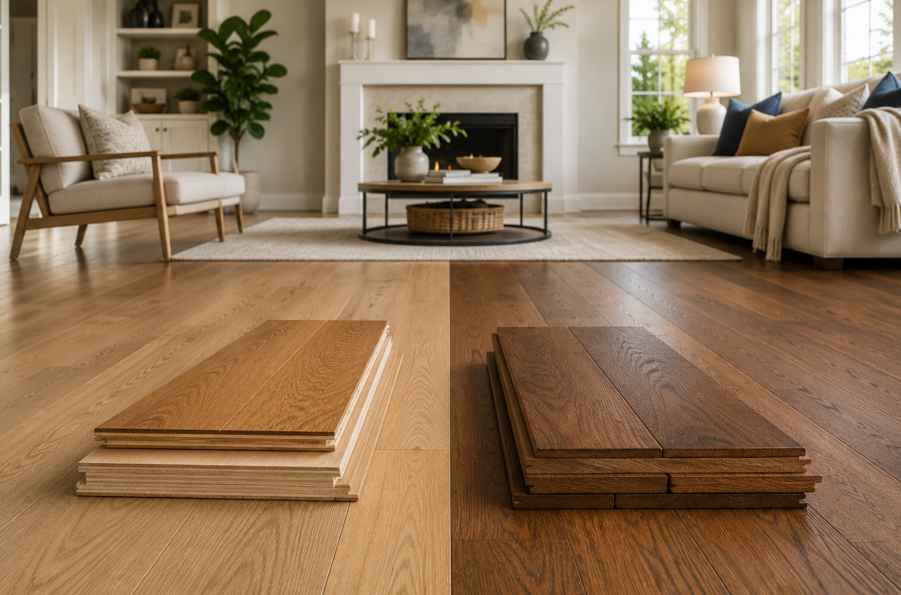
Engineered hardwood flooring is made with a real hardwood surface layer on top of a layered core. The top layer gives the floor its natural wood appearance, while the core underneath is designed to improve stability.
This layered construction is the main difference between engineered hardwood and solid hardwood. Instead of being one solid piece of wood, engineered hardwood is built in layers that help reduce movement caused by humidity and temperature changes.
It is important to understand that engineered hardwood is still real wood flooring. The visible surface is genuine hardwood, which means it can offer the same natural grain, colour variation, warmth, and texture that homeowners love. The difference is in the structure beneath the surface.
For many Nashville homeowners, engineered hardwood offers an attractive balance between beauty and practicality. It can deliver the look of traditional hardwood while offering greater flexibility for certain spaces, subfloors, and climate conditions.
Appearance: Does Engineered Hardwood Look Different?
A common concern is whether engineered hardwood looks less authentic than solid hardwood. In many cases, high-quality engineered hardwood is almost impossible to distinguish from solid hardwood once installed.
Because the top layer is real wood, engineered hardwood can feature the same species, grain patterns, knots, colours, textures, and finishes as solid hardwood. The appearance depends more on product quality, plank width, finish, and installation than on whether the floor is engineered or solid.
Both options are available in a wide range of design styles, including:
Warm oak tones for classic, inviting interiors
Light natural finishes for open, airy rooms
Rich walnut shades for formal spaces
Wire-brushed textures for relaxed character
Wide plank designs for modern homes
Matte finishes for a softer, more current look
In Nashville interiors, where traditional Southern charm often blends with updated design preferences, both engineered and solid hardwood can create a beautiful result. The right choice depends on the room, the atmosphere you want to create, and the level of performance your home requires.
How Middle Tennessee’s Climate Affects Hardwood
Middle Tennessee’s climate is one of the most important factors to consider when choosing hardwood flooring. Nashville homeowners experience humid summers, wet spring seasons, occasional winter dryness, and regular changes in indoor temperature due to heating and air conditioning.
Wood naturally responds to moisture in the air. When humidity rises, wood can absorb moisture and expand. When humidity drops, it can release moisture and contract. This movement is normal, but too much movement can cause issues such as gaps, cupping, crowning, or uneven boards.
Solid hardwood tends to move more because each plank is a single piece of wood. That does not mean solid hardwood is a poor choice for Nashville homes. It simply means proper installation, acclimation, and humidity control are essential.
Engineered hardwood is often more dimensionally stable because of its layered construction. This can make it a smart choice for homes where humidity changes, subfloor conditions, or room location create added concerns.
For homeowners who want hardwood beauty with more stability, engineered hardwood can be especially appealing in Middle Tennessee.
Where Solid Hardwood Works Best
Solid hardwood performs best in above-grade areas of the home. These are rooms that sit above ground level, such as living rooms, dining rooms, bedrooms, studies, and hallways.
It is often a strong choice for homeowners who want a traditional flooring material with long-term refinishing potential. Solid hardwood is especially well suited for formal spaces, heritage-style homes, and rooms where moisture exposure is limited.
Solid hardwood may be ideal if you want:
A classic flooring material with long-term appeal
The ability to refinish the floor multiple times
A fully natural wood plank from top to bottom
A premium finish for main living areas
A floor that can last for decades with proper care
However, solid hardwood is not usually the best fit for basements, bathrooms, laundry rooms, or areas where moisture exposure is likely. It can also be more complicated to install over concrete subfloors.
In the right setting, solid hardwood remains one of the most beautiful and enduring flooring choices available.
Where Engineered Hardwood Works Best
Engineered hardwood is highly versatile. Its layered construction allows it to be used in more spaces than solid hardwood in many cases. Depending on the product, it may be suitable for installation over concrete, in certain lower-level areas, and in rooms where humidity movement is a concern.
Engineered hardwood may be a good choice for:
Open-plan living areas
Homes with concrete subfloors
Renovation projects with height restrictions
Bedrooms and family rooms
Busy households with pets or children
Homes where humidity stability is important
Certain below-grade spaces, depending on product guidelines
For homeowners comparing Hardwood Flooring options, engineered hardwood can offer real wood beauty with practical advantages. It is especially helpful when the look of hardwood is desired, but the home’s conditions make solid hardwood less ideal.
Durability and Daily Living
Both engineered hardwood and solid hardwood can be durable, but durability depends on more than construction alone. The wood species, finish, surface texture, plank quality, and household use all play important roles.
For example, harder wood species such as hickory and oak generally resist dents better than softer woods. Matte and textured finishes can help disguise small scratches and everyday wear. Medium wood tones are often more forgiving than very dark floors, especially in homes with pets, children, or heavy foot traffic.
Solid hardwood has the advantage of being refinishable many times. This can extend its lifespan significantly.
Engineered hardwood can also be durable, especially when it has a high-quality finish and a thicker real wood surface layer. Some engineered hardwood floors can be refinished, although usually not as many times as solid hardwood.
If your household is active, the finish and colour choice may matter just as much as whether the floor is engineered or solid. A well-chosen product can help your floors remain beautiful while still supporting everyday life.
Refinishing Potential
Refinishing is one of the biggest differences between engineered and solid hardwood.
Solid hardwood can typically be sanded and refinished multiple times because the wood runs through the full thickness of the plank. This is one reason it is often viewed as a long-term flooring investment.
Engineered hardwood may or may not be refinishable, depending on the thickness of the hardwood surface layer. Premium engineered hardwood with a thicker veneer may allow refinishing once or possibly more than once. Thinner engineered products may only allow light surface refreshing or may not be suitable for sanding.
If you plan to stay in your home for many years and want the option to change stain colours or restore the surface several times, solid hardwood may have the advantage.
If your priority is stability, installation flexibility, and real wood beauty in a wider range of spaces, engineered hardwood may be the better fit.
Installation Differences
Solid hardwood is commonly nailed or stapled to a wooden subfloor. This means it usually requires specific subfloor conditions and careful acclimation before installation. The wood must adjust to the home’s indoor environment before it is installed.
Engineered hardwood often offers more installation flexibility. Depending on the product, it may be nailed, glued, stapled, or floated. This can make it a more practical option for remodels, concrete subfloors, and certain spaces where solid hardwood would be more difficult to install.
Professional installation is especially important in Middle Tennessee because moisture conditions need to be evaluated before the floor is installed. Subfloor moisture, room usage, expansion space, and product specifications all affect long-term performance.
A beautiful hardwood floor starts with the right preparation. Even the best material can underperform if it is installed in the wrong conditions.
Cost and Long-Term Value
The cost of hardwood flooring can vary widely. Product quality, wood species, plank width, finish, installation method, and subfloor preparation all influence the final investment.
Solid hardwood is often more expensive upfront, particularly for premium species or wider planks. Installation can also cost more if additional subfloor preparation is needed.
Engineered hardwood can sometimes be more cost-effective, though premium engineered products may be similar in price to solid hardwood. In some projects, engineered hardwood may reduce installation complexity, which can help balance the overall cost.
When comparing cost, homeowners should think beyond the price per square foot. It is important to consider:
How long the floor is expected to last
Whether it can be refinished
How well it suits the room
How much maintenance it requires
Whether it supports the home’s resale appeal
Whether the installation method fits the property
The best value is not always the least expensive option. It is the flooring that performs well, looks beautiful, and supports the way your household lives.
Design Considerations for Nashville Homes
Hardwood flooring has a major impact on the overall mood of a home. The colour, plank width, grain, finish, and texture all shape the way a room feels.
In Nashville homes, many homeowners are drawn to warm, natural wood tones that feel welcoming without appearing too heavy. These tones work well with neutral walls, white or cream cabinetry, stone accents, woven textures, and layered area rugs.
Wide plank hardwood can make open living spaces feel calmer and more spacious. Light oak can brighten a room and support a modern farmhouse look. Medium brown hardwood can complement traditional furniture and classic architecture. Darker tones can add richness but may show dust and scratches more easily.
Engineered hardwood often offers strong design flexibility, particularly for wide plank styles. Solid hardwood offers timeless authenticity and the ability to evolve through refinishing.
The right design choice should connect with the rest of the home, including cabinetry, trim, wall colours, furniture, and natural light.
Pet-Friendly and Family-Friendly Factors
Many Nashville and Middle Tennessee homeowners need flooring that can handle pets, children, guests, and daily movement. While no hardwood floor is completely scratch-proof, some choices are more forgiving than others.
For active households, consider:
Harder wood species
Matte or low-sheen finishes
Textured surfaces
Medium tones instead of very dark colours
Protective rugs in high-traffic areas
Prompt cleaning of spills
Regular pet nail trimming
Engineered hardwood can be a practical option for busy homes when selected with a durable finish. Solid hardwood can also work well, especially if future refinishing is important.
The best choice depends on how the room is used. A formal dining room has different performance needs than a family room, hallway, or kitchen-adjacent living space.
Which Hardwood Option Is Better for Resale?
Both engineered hardwood and solid hardwood can support resale value when they are high quality, professionally installed, and appropriate for the home.
Solid hardwood often has a strong traditional reputation because of its longevity and refinishing potential. Many buyers still associate solid hardwood with premium craftsmanship.
Engineered hardwood is also widely accepted, especially in modern homes and remodelled spaces. High-quality engineered hardwood can look beautiful and offer performance benefits that buyers appreciate.
From a resale perspective, the most important factor is choosing flooring that suits the home and looks cohesive. A well-designed, well-installed hardwood floor will usually make a stronger impression than a poorly chosen material, regardless of construction type.
When Engineered Hardwood May Be the Better Choice
Engineered hardwood may be the better choice if you want real wood beauty with added stability and installation flexibility.
It may be especially suitable if:
Your home has concrete subfloors
You are concerned about humidity movement
You want wide plank hardwood
You are renovating a modern space
You need more installation options
You want hardwood in areas where solid wood may not be ideal
For many Nashville homeowners, engineered hardwood offers the right balance of style, practicality, and climate-conscious performance.
When Solid Hardwood May Be the Better Choice
Solid hardwood may be the better choice if you want maximum refinishing potential and traditional hardwood construction.
It may be especially suitable if:
The flooring is being installed above grade
You want a floor that can last for generations
You value fully natural wood construction
You may want to refinish several times
You are restoring or enhancing a traditional home
You prefer the heritage appeal of solid hardwood
Solid hardwood remains a beautiful, classic option when the home’s conditions support it.
Making the Right Decision for Your Home
There is no single best hardwood flooring choice for every Nashville homeowner. The right answer depends on the space, the subfloor, the climate, the design style, and the way your household lives.
Solid hardwood offers tradition, longevity, and refinishing potential. Engineered hardwood offers real wood beauty with added stability and broader installation flexibility. Both can be excellent choices when matched to the right environment.
The key is to avoid choosing based only on appearance. A flooring decision should consider moisture, lifestyle, maintenance, installation requirements, and long-term goals.
Visit Floorz for Hardwood Flooring Guidance
Choosing between engineered hardwood and solid hardwood is easier when you can compare products in person and speak with a team that understands Middle Tennessee homes. Floorz brings 30+ years of design-focused flooring experience to homeowners across Nashville and the surrounding communities.
Whether you want a traditional solid hardwood floor, a modern engineered hardwood option, or expert guidance on which product will perform best in your home, the Floorz team can help you make a confident decision.
Visit the Brentwood showroom or request a free estimate to begin planning your hardwood flooring project with trusted local expertise.


